Written by: JJ Tan, Founder, Jelly
Key Takeaways
- Restaurant back-of-house inventory software automates real-time stock tracking, recipe costing, purchase orders, invoice scanning and mobile counting, replacing manual processes that delay variance identification.
- UK kitchens face unique challenges including fluctuating supplier prices, yield losses on whole ingredients, and the need for weekly counts on high-value items to keep food cost variance below 3%.
- The five core jobs inventory software must automate are stocktaking, purchasing and supplier management, recipe costing with yield, waste and variance tracking, and live reporting integrated with EPOS and accounting platforms.
- Most UK platforms charge £100–£500 per month. Per-user pricing creates friction because inventory tasks involve multiple team members, while flat per-location pricing offers better predictability for growing operators.
- Jelly provides fast onboarding, flat £129 per-location pricing and live margin visibility tailored for UK restaurants, pubs and boutique hotels expanding from one to multiple sites.
The Five Back-Of-House Jobs Inventory Software Should Automate
Stocktaking And Inventory Control In Busy UK Kitchens
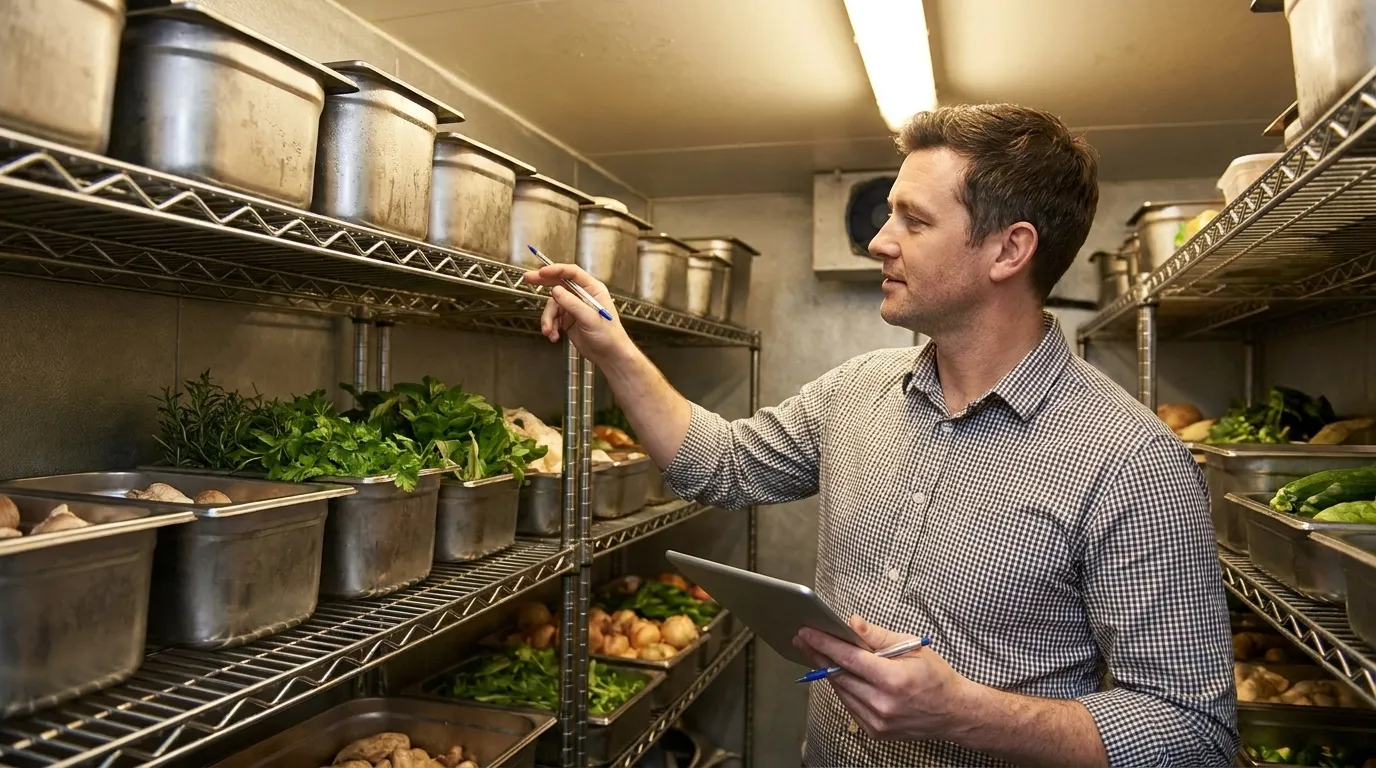
Effective inventory software depletes stock in real time as dishes sell, supports mobile counting in the walk-in, tracks par levels, and produces a theoretical versus actual usage comparison after every count. Weekly counts are recommended for high-value or high-waste categories such as fresh produce, meat, fish and spirits, with monthly counts for dry goods and packaging, because monthly-only counting delays variance identification by up to four weeks. A strong setup delivers a stocktake that takes minutes rather than hours, with variance ranked worst-first so the kitchen knows exactly where to investigate. Sushi Revolution’s monthly stocktake using Jelly takes 5–20 minutes, down from 2–3 hours previously.
Purchasing And Supplier Management With Live Price Control
Inventory software should capture every line item of every invoice, including quantity, SKU, price and tax, automatically from email or photograph. It tracks price changes across multiple suppliers and flags increases the moment they appear, rather than at month end. Strong performance looks like a price alert that fires the same week a supplier raises a rate, giving the kitchen concrete evidence to negotiate a credit note or switch to an alternative.
Recipe Costing And Menu Profitability With Yield Built In
Recipe costing works properly only when it accounts for yield. Recipe costing that ignores yield builds every menu price on sand. Software should let a chef build a dish by clicking on ingredients already populated from scanned invoices, handle unit conversions automatically, and update dish margins in real time as invoice prices change. Sushi Revolution uses Jelly to set separate target gross profits on dine-in and delivery menus, accounting for 30% delivery commissions, which results in actual gross profits 2–3% higher on average. A clear signal appears as a red margin indicator the moment a dish drops below target, without manual recalculation.
Waste And Variance Tracking For Margin Protection
Variance is the gap between what the kitchen bought and what the till recorded as sold. On a restaurant doing £500,000 a year in food sales, a two-percentage-point increase in food cost equates to £10,000 in lost margin. Inventory software should log waste at the point it occurs, differentiate spoilage from production waste and portion variance, and surface the variance by category so the kitchen can act on a specific problem rather than a blended number. Strong reporting ranks variance by category, with the highest-value discrepancies at the top.
Reporting And Integrations For Daily Gross Profit Visibility
Daily gross profit visibility, rather than a monthly accountant’s report, changes behaviour in the kitchen. Inventory software should integrate natively with the EPOS to receive item-level sales data in real time, push digitised invoices to accounting platforms such as Xero or Sage, and give both the chef and the finance manager access to the same live figures. POS-to-accounting connectors generally send only the revenue side of the business, which is roughly a third of where money leaks in a restaurant group, while dedicated inventory software covers the cost side that accounting platforms do not.
UK Inventory Software Shortlist And Best-Fit Use Cases
The main UK inventory platforms that appear in search results and operator conversations each suit a different profile. The following reflects editorial judgement. For a fuller comparison, see Jelly’s inventory management system comparison for UK hospitality and the best inventory management software for UK restaurants in 2026.
MarketMan suits operators who need deep actual-versus-theoretical variance reporting and UK supplier EDI, and who can absorb US dollar pricing (Starter $249/month, Growth $299/month, Enterprise from $449/month) and a longer setup process. It offers strong multi-site purchasing controls.
Apicbase suits large multi-site groups and contract caterers that need centralised menu engineering and nutritional data management across many locations. The platform carries corresponding implementation complexity.
Nory suits operators who want an all-in-one platform combining scheduling, forecasting and inventory in a single interface. Feature depth comes with a longer onboarding curve.
Kitchen CUT suits large chains with dedicated back-office teams. It is a quote-only enterprise system with strong multi-site functionality, designed for operators who can support a more involved rollout.
WISK suits venues where bar inventory is the primary concern, with weight-based counting and pour-cost tracking as core features.
MarginEdge suits US-based or US-aligned multi-site groups. Priced at around $350 per location per month, it captures invoices and costs recipes but does not function as a general ledger. Some UK groups run it, though US-centric platforms can carry structural limitations in UK VAT handling and supplier invoicing formats.
Restaurant365 / Toast XtraCHEF suits large US-headquartered groups requiring a combined general ledger, inventory and scheduling platform. Restaurant365 carries a real implementation cost in time and internal effort that most independent UK operators cannot easily absorb.
Syrve suits operators who want an all-in-one POS and back-office system and are prepared for a structured implementation project.
Jelly suits growing UK restaurants, pubs and boutique hotels that want streamlined back-of-house operations without a months-long setup. The next section covers Jelly in more detail.
Where Jelly Fits For Growing UK Kitchens
Jelly focuses on UK kitchens turning over £500k or more that are expanding from one site to several locations. The platform automates the five core jobs through a workflow designed for non-technical kitchen teams.
Invoices arrive by photograph or email and every line item, including quantity, SKU, price and tax, is digitised automatically to feed live dish costs without manual data entry. The invoice-to-stock automation process updates ingredient costs the moment a new invoice arrives. The Price Alert feature flags every supplier price change, giving chefs concrete evidence to negotiate credits or switch suppliers. Flash and Sales Mix reports provide daily gross profit visibility by integrating with the EPOS, so teams do not wait for an accountant.
Jelly integrates in real time with Square, EPOS Now, Lightspeed and Toast. Connecting a supported EPOS typically takes around five minutes. Jelly appears on the Lightspeed marketplace, and EPOS Now is particularly popular with independent and single-site UK operators. Digitised invoices push to Xero with one click, with Sage integration in development.
Pricing is a flat £129 per location per month with no per-user charge. Per-user pricing punishes the behaviour operators want, because inventory is a job several people touch. Onboarding delivers initial value in the first week. Price alerts and spending insights go live as soon as suppliers send invoices to a dedicated address, or within 24 hours of the first photographed invoice.
Jelly customers save 10–20 hours of admin per month, cut food costs by 3% on average in the first three months, and see gross margins increase by around 2 percentage points in the same period. Dish costing that previously took 28 minutes in a spreadsheet takes about 3 minutes in Jelly. Amber, a Mediterranean restaurant in East London run by Chef-Owner Murat Kilic, saves £3,000–£4,000 per month using Jelly through supplier credits, better buying decisions and tighter menu controls.
Large chains with dedicated back-office teams or US-headquartered groups needing consolidated multi-entity accounting will usually find other platforms on the shortlist better suited. For growing UK independents and small groups, Jelly combines fast setup, flat pricing and live margin visibility in a way that fits day-to-day operations.
Restaurant Inventory Software Pricing In The UK
UK restaurant inventory software typically follows one of three pricing models: per-location subscription, per-user pricing, or feature-tiered subscription. Single-site platforms generally cost between £100 and £500 per month, with multi-site pricing scaling by location.
Total cost depends on five factors. These are number of sites, number of users, depth of EPOS and accounting integration, invoice volume, and the level of onboarding support included. Per-user pricing often creates friction because inventory touches the chef, the kitchen team, the operations manager and the finance function simultaneously. Named-user licences become costly when many occasional or part-time users need access.
Hardware, premium support packages and third-party integration connectors can add cost beyond the headline subscription. A cheaper monthly price can end up more expensive if it requires extra tools, manual processes or paid integrations.
Jelly charges a flat £129 per location per month, with no variable charge per user or feature.
How UK Restaurants Run Inventory Week To Week
In practice, UK restaurant inventory management runs as a weekly loop. Teams count physical stock, compare it against what was ordered and what recipes say should have been used based on till sales, then investigate the variance. Most operators who commit to a proper weekly count and act on what it shows see the effect on their food cost percentage within a couple of months, without changing any recipe, price or supplier relationship.
Par levels, meaning the minimum amount of an item to hold before reordering, work best when set from actual weekly usage rather than gut feel. This approach reduces panic-ordering and over-ordering. Deliveries should be verified against the purchase order for quantity, pack size and price before signing, and checked for temperature compliance on chilled and frozen goods per Food Standards Agency cold-chain guidance.
Two analytical frameworks help operators decide where to focus control effort.
80/20 Rule For Restaurant Inventory Focus
The 80/20 rule, or Pareto principle, holds that roughly 20% of stock items account for approximately 80% of inventory value and cost variance. In a UK kitchen, this usually means a small number of ingredients such as prime proteins, premium spirits and high-volume produce drive most food cost and most margin leakage. Tight controls, frequent counts and rigorous portion discipline applied to that 20% deliver the greatest return on management effort, without requiring the same rigour across every SKU in the storeroom.
ABC Analysis For Practical Stock Control
ABC analysis categorises stock items by value and usage. A items are high-value and fast-moving and should be counted weekly. B items are moderate-value and steady-moving with fortnightly counts. C items are low-value and slow-moving with monthly review. In a UK kitchen with multiple suppliers raising prices at different rates, ABC analysis prevents the exhaustion of applying the same rigour to a case of table salt as to a side of beef. A items are where supplier price tracking, yield analysis and portion control matter most, while C items need only periodic review to confirm they are not accumulating as dead stock.
Pre-Purchase Checks For Inventory Software Demos
The following checks belong in every demo conversation. They address the practical details that determine whether the software gets used after go-live.
EPOS Compatibility And Data Depth
Inventory software must integrate cleanly with the existing till. EPOS Now, Lightspeed, Square and Toast are the most common UK systems. Operators should verify that the specific integration is production-ready and syncs recipe-level product codes, not just revenue totals, because a revenue-only sync covers roughly a third of where money leaks. It helps to confirm whether the integration is native or relies on a nightly file export, and to check that it works with the exact POS version in use before signing.
Supplier Integration And Invoice Capture
Invoice capture should feel straightforward for both the team and suppliers. Strong platforms allow suppliers to email invoices directly to a dedicated address and handle the invoice formats used by major wholesalers. Jelly’s invoice-to-stock automation captures every line item by photo or email without manual data entry. Any platform under evaluation should demonstrate this using a real invoice from one of the operator’s current suppliers.
Accounting Integration And Support Ownership
Xero and Sage are the most common UK accounting platforms for this operator profile. Operators should establish whether the connection is a native integration, a third-party connector, or a custom build, who supports it, how failures are reported, and whether data can be re-synced after an outage. A middleware connector adds both cost and an extra failure point.
Onboarding Time And Recipe Library Scope
Onboarding timelines need realistic estimates. Building a complete recipe library for a 60-dish menu typically takes 15–20 hours of data entry, and incomplete implementation is the most common reason inventory software delivers no ROI. Many failed implementations stall when someone tries to build 800 items before going live, loses momentum around item 300, and the project quietly dies. Starting with the top 30 items by spend delivers a usable variance report in the first week.
Staff Adoption And Day-To-Day Use
Inventory software must work for a busy, non-tech-savvy chef during service. Most restaurant technology rollouts fail when staff quietly revert to their old ways of working a few weeks after go-live, which makes lasting adoption a trust problem as much as a training problem. Vendors should show the mobile counting interface on a phone in a realistic cold room scenario. If the interface creates friction, staff will skim the count.
Frequently Asked Questions
How Do Restaurants Do Inventory Management?
UK restaurants usually run inventory management as a recurring cycle. Stock is counted at fixed intervals, compared against what was purchased and what recipes say should have been used based on sales, and the variance is investigated by category. High-value categories such as fresh produce, meat, fish and spirits are counted weekly, while dry goods and packaging are counted monthly. Par levels are set from actual weekly usage and trigger reorders when stock falls below the minimum needed to trade through the next delivery window. The formula for food cost percentage is: (Opening Stock + Purchases − Closing Stock) ÷ Sales × 100. A variance of 1–2% is normal in a well-run kitchen, and a variance above 3% consistently indicates a specific traceable problem.
What Is The 80/20 Rule In Inventory?
The 80/20 rule, or Pareto principle, states that roughly 20% of stock items account for the majority of inventory value and cost variance. In a UK kitchen, this usually means a small number of ingredients drive most of the food cost and most of the margin leakage. Tight controls, frequent counts, strict portion discipline and active supplier price monitoring applied to that critical 20% deliver the greatest return on management effort without requiring the same rigour across every item in the storeroom.
What Is ABC Analysis In Inventory?
ABC analysis classifies stock items by value and usage frequency into three categories. A items are high-value and fast-moving, such as prime proteins, premium spirits and high-volume produce, and should be counted weekly with tight portion controls and active supplier price tracking. B items are moderate-value and steady-moving, counted fortnightly. C items are low-value and slow-moving, reviewed monthly to confirm they are not accumulating as dead stock. The framework prevents the exhaustion of applying the same management effort to every SKU and works well in UK kitchens where multiple suppliers raise prices at different rates.
How Much Does Inventory Software Cost?
Most UK platforms use subscription pricing. Single-site operations typically pay between £100 and £500 per month, depending on the platform, the number of SKUs tracked, integration depth and onboarding support included. Per-user pricing models can become expensive because inventory is a job that several people touch, including the chef, kitchen team, operations manager and finance function. Per-location flat pricing gives more predictable costs for growing operators. Jelly charges a flat £129 per location per month with no per-user charge.
What Are The Four Types Of Inventory Management?
The four main types of inventory management are Just-in-Time, periodic inventory, perpetual inventory and ABC analysis. Just-in-Time orders stock only when needed to minimise holding costs. Periodic inventory is counted at fixed intervals such as weekly or monthly. Perpetual inventory updates continuously via a digital system linked to the EPOS so stock levels deplete in real time as dishes sell. ABC analysis categorises items by value and usage to concentrate control effort where it has the greatest financial impact. Most UK restaurants use a combination, with perpetual tracking via software for A items, periodic counts for B and C items, and ABC analysis to set the counting cadence.
Conclusion: Choose Inventory Software That Removes Admin
Back-of-house inventory software matters for UK restaurants, pubs and boutique hotels because food cost leaks silently through supplier price changes, yield losses and uninvestigated variance. The right software removes admin, provides real-time margin visibility, and fits the EPOS, suppliers and accounting stack already in place.
The evaluation lens stays simple. The platform should automate stocktaking, purchasing, recipe costing, waste tracking and reporting without a months-long setup or a pricing model that penalises usage. For growing UK kitchens that want fast time-to-value, Jelly is designed to meet those requirements.