
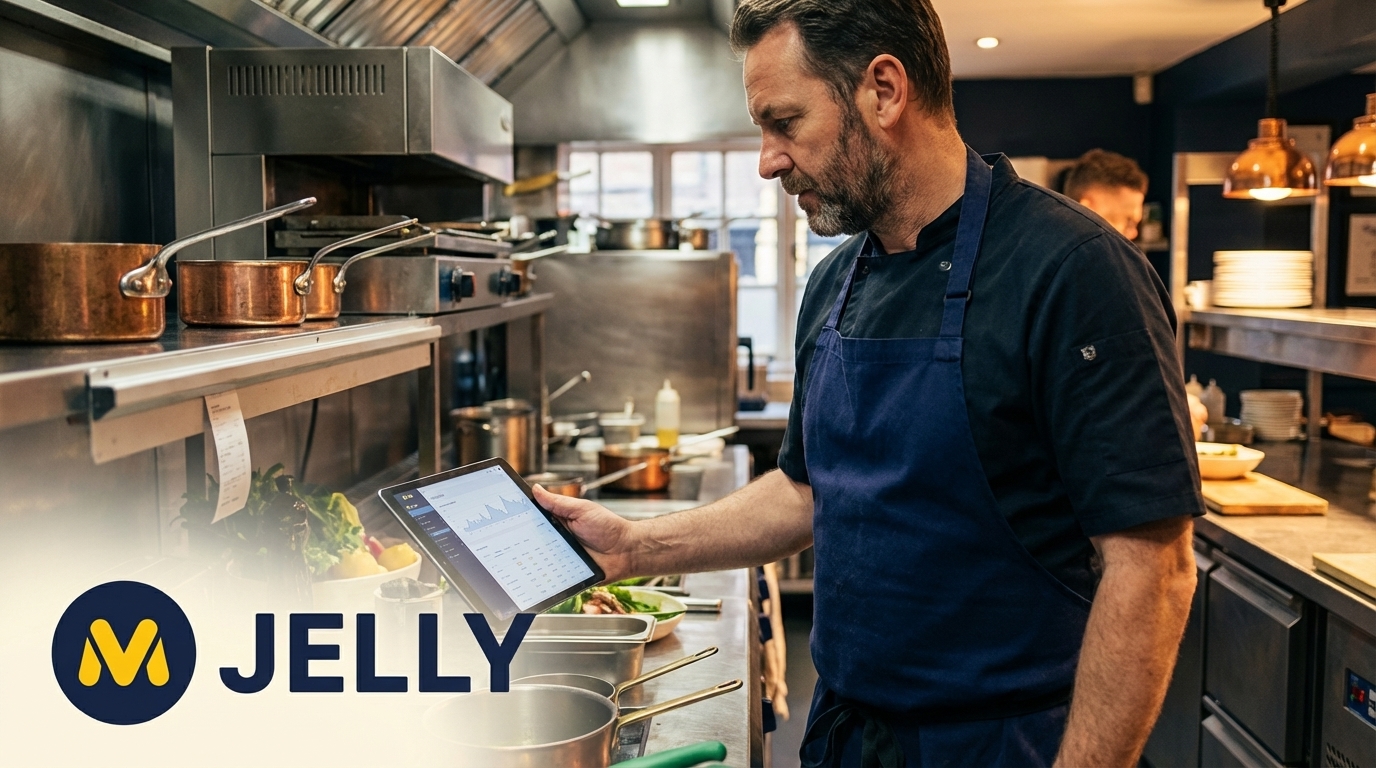
Back-of-house operations in UK hotels often cause significant profit loss. The issue rarely sits at the front desk or in guest rooms. It usually emerges in the kitchen, where manual processes, outdated systems, and operational inefficiencies erode margins and reduce guest satisfaction. Boutique hotels with annual revenues exceeding £500,000 face particular pressure. Operational costs are rising, supplier prices are volatile, and staffing challenges are persistent, so hotels need a more strategic response than traditional hospitality management approaches.
Modern back-of-house technology gives growth-focused boutique hotels clearer control over costs and profitability. Integrated systems automate key processes such as invoice management, inventory tracking, and real-time cost analysis. Hotel kitchens move from reactive cost centres to managed profit drivers. Hotels that implement suitable technology quickly gain access to accurate data, faster workflows, and measurable financial improvements.
The Problem: How Outdated Hotel Back-of-House Operations Drain Profit and Guest Satisfaction
Hidden Financial Leakage: The True Cost of Manual Processes
The hospitality industry faces a significant challenge as rising operational costs in food, staffing, and maintenance increase the pressure created by manual or inefficient back-of-house practices. Many hotel owners focus on visible expenses such as utilities or marketing, yet numerous small inefficiencies in manual back-of-house processes often create greater and less visible profit loss.
Invoice processing in a typical boutique hotel kitchen usually involves invoices arriving from multiple suppliers by email or on paper. Staff then enter line items into spreadsheets, where transcription errors accumulate. Price changes can remain unnoticed for weeks or months, which erodes margins on popular menu items. By the time monthly reports reveal the impact, it is often too late to recover lost profit or negotiate adjustments with suppliers.
Manual processes also create data silos. Critical cost information sits in disconnected spreadsheets and filing cabinets, so managers lack real-time visibility of true food costs. Without timely data, teams cannot respond quickly to market movements or supplier increases. Cost management then becomes reactive, and issues only appear after they have already affected the bottom line.
Disconnected or manual processes reduce financial transparency, weaken operational control, and limit performance analysis for strategic decisions. Without integrated data, hotel operators make important decisions based on outdated or incomplete information.
Operational Bottlenecks and Staff Overwhelm
Operational inefficiencies create a clear human cost for hotel teams. Kitchen staff spend many hours on administrative tasks that do not enhance the guest experience. Typical activities include:
- Manually entering invoice data into spreadsheets
- Reconciling supplier statements and checking for discrepancies
- Calculating dish costs by hand
- Chasing missing invoices and pricing corrections
These tasks pull skilled team members away from food preparation, menu development, and service quality.
High staff turnover and overwhelm increase when teams work with outdated workflows and limited support. When chefs and kitchen managers spend 10 to 20 hours per week on paperwork rather than creative work, job satisfaction falls and turnover rises.
This administrative load often creates a cycle of attrition. Experienced staff leave because of frustration with inefficient processes. Remaining team members inherit greater workloads and stress. New hires then require extensive training in both culinary skills and the complex manual systems that differ between properties and suppliers. Constant turnover disrupts workflow continuity and undermines institutional knowledge.
The impact reaches beyond the kitchen. When back-of-house teams are occupied with paperwork, they have less capacity to support front-of-house operations during busy periods. Guests then experience longer food service times, inconsistent quality, and visible signs of pressure that stem from issues in the kitchen rather than at the table.
Impact on Guest Experience and Brand Reputation
Back-of-house performance links directly to guest satisfaction. When kitchen operations rely on manual processes and poor data visibility, the effects appear across the guest journey. Frequent issues include order errors, slow kitchen-to-server communication, outdated workflows, understaffed shifts, and manual entry mistakes.
Manual inventory management often causes stockouts of popular menu items. Servers must then tell guests that favourites are unavailable or offer last-minute substitutions. Without real-time cost visibility, kitchen managers may prepare dishes at a loss, which forces unsustainable margins or sudden price increases. Poor communication between kitchen and service teams leads to longer waits and more order inaccuracies.
Inconsistent standards in food service create trust issues and negative guest perceptions. When manual processes cause variation in portion sizes, cooking times, or ingredient quality, guests notice. This inconsistency weakens brand positioning and makes it harder to build loyalty in a competitive market.
Reputational damage from operational inefficiencies reaches beyond individual stays. Online reviews, social media comments, and word-of-mouth feedback often highlight service delays or quality issues that start in the kitchen. In a sector where reputation influences booking decisions, back-of-house issues can affect occupancy rates and long-term revenue growth.
The Solution: Integrated Back-of-House Technology for Modern Hotels
Streamlining Operations for Efficiency and Control
Modern back-of-house technology turns hotel kitchens into more predictable, data-led operations. Integrated systems automate key functions such as invoice processing, inventory management, and cost analysis. Staff can then focus on tasks that directly improve the guest experience.
Improvement starts with automated data capture. Instead of typing invoice details manually, smart systems scan and digitise each line item. Accuracy improves while hours of data entry disappear. Automated capture also supports real-time cost tracking so managers see expenses as they occur rather than waiting for month-end reports.
Automated workflow management brings greater consistency across operations. Digital checklists replace paper forms, provide clear accountability, and track progress in real time. Staff can access current procedures, cost information, and inventory levels through simple interfaces that require limited training. Standardisation reduces errors, improves efficiency, and supports consistent performance even when teams change.
Integrated systems also improve overall control. Managers gain a clear view of costs, stock, and staffing levels from a single dashboard. This visibility is especially valuable for multi-property operators who need central oversight without being on site at every location.
Real-Time Data for Strategic Decision-Making
The main advantage of modern back-of-house technology is access to real-time, actionable insight instead of late historical reports. Automated systems provide live operational data for immediate decision-making, so hotel teams can respond to market changes and operational issues as they appear.
Real-time cost visibility changes procurement from a reactive process to a planned strategy. When the system highlights a price change, managers can negotiate with suppliers, source alternatives, or adjust menu pricing before margins fall. This approach protects profitability while maintaining service quality.
Integrated data also supports structured menu engineering based on actual costs and sales rather than estimates. Hotels can identify their most profitable dishes, adjust portion sizes, and promote high-margin items. This data-led approach to menu management often delivers 2 to 5 percent improvements in gross profit margins within the first quarter of use.
Reliable operational data also supports long-term planning and growth. Accurate real-time insight underpins expansion plans, new concepts, and financial forecasts. Teams can model the impact of new menu items, evaluate supplier relationships more objectively, and plan operational investments with confidence.
Hotels that want to understand how technology can improve operational efficiency can review a live example in their own kitchen. See how Jelly can automate your kitchen management and book a chat.
Unlock Profit Potential with Jelly: Your Hotel’s Smart Back-of-House Partner
Jelly is an intuitive, integrated solution designed for growing hotels that want to automate and improve kitchen operations. Unlike complex systems that demand months of implementation and extensive training, Jelly provides value quickly through automation that fits into existing hotel processes.
Automated Invoice Scanning sits at the core of Jelly. The system removes manual data entry by digitising every line item from supplier invoices, whether received by email or photographed into the platform. Accurate cost capture for each ingredient happens automatically, creating the reliable data foundation needed for further analysis and optimisation.
Live Dish Costing & GP Tracking gives real-time profit margins for every menu item and updates immediately when supplier prices change. Hotels move away from static spreadsheets to practical insight that supports fast decisions. As ingredient prices shift, the system recalculates dish costs and keeps continuous visibility of menu profitability, which is difficult to achieve with manual methods.
Price Alert System flags ingredient price changes as they happen and supports data-led supplier negotiations and credit note claims. Jelly users report clear results from this approach: “Price hikes were crushing our margins, I felt helpless. With Jelly, every dish cost is up-to-date at my fingertips. We slashed food costs by 5% in a month. It is a game changer!” shares Stuart Noble, Head Chef at Cairn Lodge Hotel.
Connected Accounting & POS Integration streamlines financial reconciliation and provides a fuller view of performance. The system pushes digitised invoices directly to accounting software such as Xero, delivering around a 90 percent reduction in bookkeeping time while maintaining accuracy and compliance. Integration with POS systems enables sales mix analysis that reveals which menu items drive both volume and profit.
Rapid Onboarding & Time-to-Value sets Jelly apart from platforms that require long implementation periods. Hotels can start to see measurable benefits within days of setup rather than months. Early value often comes from price alerts and spending insight, which appear as soon as suppliers begin sending invoices to the dedicated email address or kitchen staff start photographing invoices into the system.
Evidence from hotel operators highlights Jelly’s impact. Ruth Seggie, Owner of The Howard Arms, explains: “Our accountant said we’d be lucky to hit 60% gross profit. After using Jelly, we reached 80%. Now I sleep better knowing my costs are under control and can react instantly, not weeks later.”
See how Jelly can automate your kitchen management and book a chat.
Improving Hotel Operations: Key Areas of Impact with Jelly Back-of-House Technology
Taming Inventory: Precision and Reduced Waste
Manual inventory methods create a chain of inefficiencies that directly affect hotel profitability. Traditional approaches rely on physical counts, paper-based tracking, and estimated usage calculations. These methods often lead to inaccuracies, waste, and missed cost optimisation opportunities. The gap between theoretical stock levels and actual usage makes it difficult to identify waste sources or refine purchasing decisions.
Jelly’s automated invoice scanning improves inventory management by providing precise, live ingredient costs with every delivery. Instead of relying on estimates or outdated spreadsheets, managers gain real-time visibility of ingredient prices and usage patterns. Accurate data supports inventory strategies that reduce waste while maintaining availability of key ingredients.
Integration with POS data shows actual consumption rather than theoretical usage. Hotels can compare expected and actual use, identify waste, and apply targeted reduction plans. This data-led method often reduces food waste by 15 to 25 percent and improves cost accuracy.
The experience of Amber Restaurant illustrates this impact. Amber Restaurant saved £3,000 to £4,000 per month by using Jelly data to guide purchasing decisions and tighten inventory controls. Chef-Owner Murat Kilic credits this visibility and control with keeping the business viable.
Mastering Procurement: Data-Driven Supplier Negotiations
Many hotel procurement processes lack the data needed for effective supplier negotiation. Without clear insight into price trends, delivery performance, and quality metrics, managers often approach negotiations from a weaker position. Suppliers understand this information gap and can shape pricing discussions to their advantage.
Jelly’s Price Alert feature changes this dynamic by highlighting price changes across all suppliers and products. The system flags each increase or decrease and gives managers the evidence required to question unjustified rises, negotiate better rates, and claim credit notes where appropriate. This transparency often leads directly to cost savings.
The same data also supports broader evaluation of supplier performance. Hotels can track delivery accuracy, product quality, and service standards across all vendors. This information enables strategic supplier consolidation, targeted improvement discussions, and informed decisions about which relationships to grow.
Stuart Noble, Head Chef at Cairn Lodge Hotel, describes the practical difference: “Price hikes were crushing our margins, I felt helpless. With Jelly, every dish cost is up-to-date at my fingertips. We slashed food costs by 5% in a month. It is a game changer.”
Unlocking Menu Profitability: Real-Time Insights for Growth
Menu engineering is one of the strongest levers for profit optimisation in hotel operations, yet many properties still rely on old cost assumptions and historic data. Manual dish costing is time-intensive, prone to error, and quickly becomes outdated when ingredient prices shift. This gap between assumed and actual costs weakens pricing strategy and profit performance.
Jelly calculates live gross profit margins for every dish by combining real-time ingredient costs with POS sales data. This integration shows which dishes deliver the best margins and how popularity and profitability combine to drive overall kitchen results. Hotels can identify underperforming items, refine pricing, and promote high-value dishes.
The platform’s recipe management tools reduce the dish costing process from an average of 28 minutes manually to around 3 minutes automatically. Kitchen managers can test ingredient swaps, portion changes, and preparation methods while instantly seeing the impact on profit. This agility supports faster menu updates and seasonal changes that keep margins healthy across the year.
The results at The Howard Arms show what this can mean in practice. Owner Ruth Seggie notes: “Our accountant said we’d be lucky to hit 60% gross profit. After using Jelly, we reached 80%. Now I sleep better knowing my costs are under control and can react instantly, not weeks later.” This improvement from 60 to 80 percent gross profit reflects a substantial shift in operational efficiency and profitability.
Streamlining Administration: Reclaiming Time and Focus
Administrative workload is a hidden cost that extends beyond direct labour. Disconnected or manual processes limit operational control and slow strategic decision-making. When managers and kitchen staff spend 10 to 20 hours each week on data entry, reconciliation, and reporting, they have less time for strategy, staff development, and guest experience.
Jelly automation reduces this burden through digitisation and integration. The system processes invoices from email or photos, extracts key data, and connects directly with accounting platforms such as Xero. This end-to-end workflow can cut bookkeeping time by around 90 percent while improving accuracy and supporting compliance with financial reporting requirements.
Time savings then appear across the business. Kitchen managers can focus on menu development, staff training, and quality checks instead of spreadsheets. Finance teams can devote more time to analysis and planning. Owners can spend more energy on growth projects and guest experience rather than day-to-day firefighting.
Holly, Operations Director at Social Pantry, summarises the effect: “All the tools on the market require so much manual work. Jelly is so simple to use, I can’t see myself running the business without it.” This combination of simplicity and automation supports ongoing operational improvement.
Hotels that want to improve their back-of-house operations can start with targeted automation. See how Jelly can automate your kitchen management and book a chat.
Jelly vs. The Old Way: A Comparison of Hotel Back-of-House Management
|
Feature / Approach |
Manual Processes (The Old Way) |
Jelly (Modern Hotel Back-of-House Technology) |
|
Invoice Processing |
Time-consuming manual entry, prone to errors, delayed reconciliation, paper-based filing systems |
Automated scanning and digitisation of every line item, instant data extraction, cloud-based storage |
|
Ingredient Costing |
Spreadsheet-based calculations, outdated pricing data, 28-minute manual process per dish |
Live, automatic updates with every invoice, 3-minute dish costing, real-time cost visibility |
|
Profit Margin Tracking |
Monthly reports arrive too late for action, estimated calculations, historical data only |
Real-time GP for every dish, daily Flash Reports, instant margin alerts |
|
Supplier Price Monitoring |
Reactive approach, price changes often unnoticed for weeks, manual price comparison |
Proactive ‘Price Alert’ flags all changes instantly, automated price trend analysis |
|
Admin Time |
10-20 hours/month on data entry, reconciliation, and manual reporting tasks |
90% reduction through automation, automated accounting push, streamlined workflows |
|
Operational Control |
Limited visibility, reliance on manual checks, delayed problem identification |
Centralised dashboard, real-time insights, proactive management capabilities |
Frequently Asked Questions (FAQ) About Hotel Back-of-House Technology
How does back-of-house technology specifically help hotels save money and control costs?
Back-of-house technology reduces costs by addressing core inefficiencies in manual operations. Automated invoice processing removes transcription errors and ensures accurate cost capture, which prevents loss when ingredients are priced incorrectly or quantities are misrecorded. Real-time cost tracking then supports quick responses to supplier price changes so hotels can negotiate adjustments, claim credit notes, or source alternative suppliers before margins decline.
The largest savings often come from proactive cost management through price alerts. These notifications highlight price increases immediately and give managers the information they need to challenge unjustified rises and negotiate better terms. Many hotels only uncover long-running overcharging once they introduce transparent cost tracking.
Automation also reduces administrative labour by up to 90 percent and releases staff to focus on revenue-generating work instead of data entry and reconciliation. In many cases, the combined effect of lower food costs and improved efficiency delivers 2 to 5 percent gains in gross profit margin within the first quarter of use.
Is integrated back-of-house technology difficult for hotel staff, specifically chefs, to adopt?
Modern back-of-house platforms are built for ease of use, with the understanding that kitchen staff value speed and clarity over complex features. Systems such as Jelly offer intuitive interfaces that require limited training, and most users become comfortable within hours rather than days or weeks.
Successful adoption depends on choosing tools that fit existing workflows instead of forcing complete operational change. Effective platforms automate tasks that staff already carry out manually, including invoice processing and cost calculations, so the change feels like a simplification rather than a disruption.
Visible early wins also support engagement. When staff see immediate benefits such as automatic price alerts or instant dish costing, they quickly recognise the value of the system. Reducing repetitive administrative tasks usually improves job satisfaction because teams can focus more on culinary work.
Can back-of-house technology truly improve guest experiences in hotels?
Back-of-house efficiency has a direct impact on the guest experience. Streamlined operations support consistent food quality, accurate orders, and timely service that guests notice immediately. When kitchen teams spend less time on administration and more time on preparation and quality control, service standards tend to rise across the hotel.
Accurate inventory management reduces the risk of stockouts that lead to unavailable menu items or last-minute substitutions. Real-time cost visibility helps maintain consistent portions and preparation standards that guests expect from quality hotel dining. Automated systems also reduce order errors and communication failures between kitchen and service staff.
Stable and predictable operations give front-of-house teams more time to focus on guests instead of managing issues from the kitchen. This improved focus often leads to higher satisfaction scores, more positive reviews, and stronger repeat business.
What kind of ROI can hotels expect from back-of-house technology investment?
Many hotels see a clear return on investment within the first month of implementing back-of-house technology, with further gains building over time. Direct savings come from reduced food costs, often a 3 to 5 percent improvement, lower administrative labour through automation, and stronger supplier negotiations based on transparent pricing data.
The experience at Amber Restaurant illustrates the potential. They save £3,000 to £4,000 each month through better purchasing decisions and tighter cost control, which equates to roughly a 68 times return on investment. The Howard Arms improved gross profit from 60 to 80 percent through consistent cost optimisation.
In addition to financial returns, hotels benefit from more stable operations, higher staff satisfaction, and better guest experiences that support revenue growth. The combination of cost reduction and enhanced revenue creates a strong case for investment within a short time frame.
How quickly can hotels implement back-of-house technology and start seeing results?
Modern systems are designed for fast deployment, and many hotels start to see benefits within days rather than months. Implementation often begins with automated invoice processing, which delivers early value as soon as suppliers send invoices to the dedicated system email address.
Full rollout usually takes place within the first week, including connections to existing accounting and POS systems. Unlike many legacy tools, contemporary platforms work with current workflows and require limited operational change.
A focus on the highest-impact features first accelerates results. Price alerts and automated invoice scanning often deliver quick wins that justify the investment, while features such as menu engineering and sales mix analysis provide ongoing optimisation over the longer term.
Conclusion: Strengthen Your Hotel’s Future with Smart Back-of-House Technology
The hospitality landscape now demands a level of operational performance that manual systems struggle to deliver. Hotels that continue to rely on spreadsheets, manual invoice processing, and reactive cost management face a challenging route to sustainable profitability. Rising operational costs, supplier volatility, and staffing pressures require structured responses that automation and integrated technology can support.
A shift from manual to automated back-of-house operations is more than a process upgrade. It is a strategic change that helps hotels compete in a modern market. Properties that adopt comprehensive back-of-house technology gain better cost control, higher operational efficiency, and more consistent guest experiences.
Jelly offers a straightforward path for growth-focused boutique hotels that want to make this shift. The platform combines automated invoice processing, real-time cost tracking, and connected integrations to create quick wins while building a solid operational foundation. Many hotels that implement Jelly report 2 to 5 percent improvements in gross profit margins within the first quarter, creating financial gains that build over time.
Evidence from current users shows that back-of-house technology has become a core requirement for hotels that aim for long-term profitability and growth. Modernising back-of-house operations is now a practical priority rather than a future option.
Hotels that want to strengthen kitchen performance and profitability can start by exploring a Jelly implementation. See how Jelly can automate your kitchen management and book a chat.