
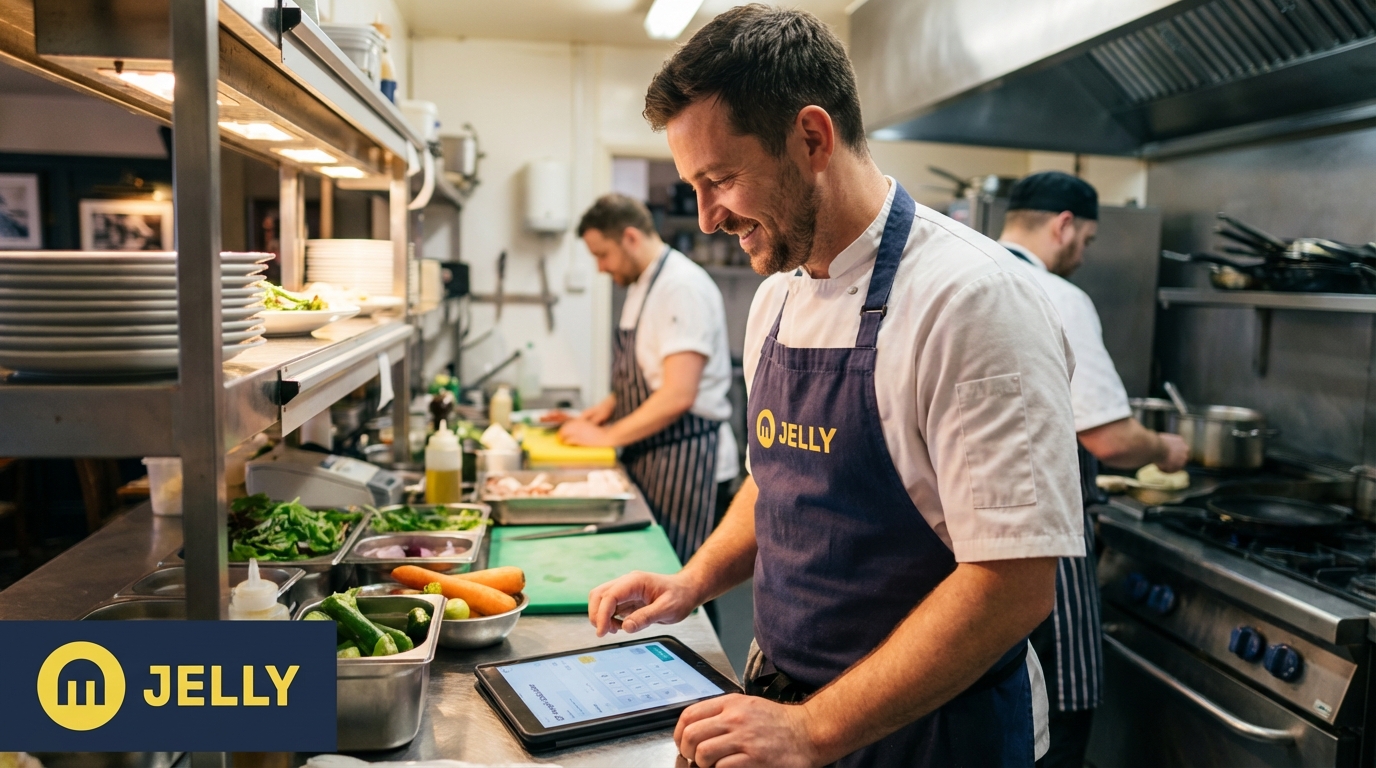
Key Takeaways for GP Margin Calculators in UK Hospitality
- UK hospitality faces tight margins, with food and beverage GP at 20–27.7% against a 70% industry target.
- Manual GP calculations can waste 10–20 hours each week and miss real-time price changes, while automation delivers live insights.
- Leading calculators scan invoices, sync with POS, handle VAT correctly, and cut dish costing from 28 minutes to about 3 minutes.
- Jelly delivers around 68x ROI, 2–3 percentage point margin gains, and tools like GP Flash reports and automatic recipe updates.
- Book a Jelly demo today to move from manual GP tracking to automated, real-time visibility.
Current GP Margin Benchmarks and Common Pitfalls in UK Hospitality
UK hotels, restaurants, and pubs now operate in a margin-squeezed environment. Hotels report food and beverage margins of just 20–27.7%, while pubs face rising costs despite revenue growth. The industry still targets 70% GP, which demands accurate and consistent calculations.
The classic 30/30/30/10 rule of 30% food, 30% labour, 30% overheads, and 10% profit has become less rigid. Modern operators track prime costs, combining food and labour, and accept that drinks usually carry higher GP than food.
VAT errors remain one of the biggest GP pitfalls. Many teams forget to divide gross prices by 1.20 to strip out 20% VAT. This mistake inflates revenue figures and skews GP calculations. Problems multiply when teams rely on spreadsheets without automated VAT handling.
Operators who want stable margins now move away from manual processes. Schedule a chat to see how automated GP tracking removes calculation errors and gives live margin visibility.
Criteria That Define the Best GP Margin Calculator for Hospitality
The strongest GP margin calculators for hospitality provide real-time accuracy through invoice automation and POS integration. They update ingredient costs automatically, deliver 3-minute dish costing instead of 28-minute spreadsheet sessions, handle UK VAT correctly, flag price changes, scale across multiple sites, and complete setup within about one week.
Manual tools fall short because they depend on constant data entry and cannot follow live supplier price changes. Effective platforms scan every invoice line, connect with accounting tools such as Xero, and send instant alerts when suppliers change prices. They also handle complex recipes, unit conversions, and wastage percentages without extra work from your team.
Growing operators with several suppliers and locations need centralised recipe management. A strong system keeps a digital cookbook where every dish cost updates automatically when ingredient prices move. Teams avoid recalculating recipes after each delivery and still keep accurate GP on every menu item.
Head-to-Head Comparison of Leading GP Margin Calculators
GP margin calculators in UK hospitality fall into four main groups: automated platforms, mobile apps, wholesaler tools, and legacy systems. Each group serves a different type of operator, yet only automated platforms consistently provide real-time insights for growing businesses.
|
Tool |
Automation/Real-Time |
Ease/Setup |
Price/ROI |
|
Jelly (Best Overall) |
Yes, with live GP Flash, Price Alerts, and Menu Engineering |
3-minute dish costing, under 1 week setup |
£129 per location, 2–3% margin gains, around 68x ROI |
|
Lynx/Roslyns Apps |
No, manual inputs only |
Mobile interface with quick manual entry |
Free, but no POS sync or real scalability |
|
Brakes/Creed/Birchall |
No, static web calculators |
Basic manual entry forms |
Free, yet limited to wholesaler product ranges |
|
MarketMan/Nory/Kitchen Cut |
Partial automation with complex feature sets |
28-minute plus dish costing and months of setup |
Expensive with high complexity overhead |
Jelly stands out through automation that cuts around 90% of bookkeeping time. Some competitors scan invoices, yet Jelly combines this with full menu engineering and live GP reporting. Mobile apps such as Lynx help with quick checks but usually lack POS integration for hospitality and do not track real-time prices across all suppliers.
Wholesaler calculators from Brakes, Creed, and Birchall stay free but restrict users to their own product lists. Legacy systems like MarketMan and Nory offer broad functionality, although they often require long implementations and ongoing admin that smaller operators struggle to maintain.
How Jelly Transforms Daily Work for Chefs and Finance Teams
Finance managers who rely on manual tools often wait for monthly accountant reports that arrive long after issues appear. Jelly’s Flash Report replaces that delay with daily GP dashboards that show which dishes, suppliers, and sites affect profitability. Teams can act immediately instead of patching problems weeks later.
Executive chefs face a similar choice. They can spend 28 minutes costing each dish in spreadsheets or use Jelly’s Cookbook to build recipes in about 3 minutes. When ingredient prices change, manual systems force chefs to recalculate every affected recipe. Jelly updates all linked recipes automatically and flags any dish that drops below target margin with clear red indicators.
Claudio from Illuminati Group Executive explains the impact: “I was buried under piles of paperwork, spending endless hours just inputting data. Jelly automated it all and I can focus on what I love.” Stuart Noble from Cairn Lodge Hotel adds: “Price hikes were crushing our margins, I felt helpless. With Jelly, every dish cost is up-to-date at my fingertips. We slashed food costs by 5% in a month.”
The Amber restaurant case study shows the numbers behind these stories. The team saved £3,000–£4,000 each month through automated price alerts and real-time costing, which delivered a 68x return on investment. Owner Murat Kilic sums it up simply: “Jelly keeps my business alive.”
Choosing the Right GP Margin Calculator for Your Operation
Teams that feel blocked by spreadsheets and slow pricing decisions usually benefit most from automated tools such as Jelly. Single-site operators with simple menus may manage for a while with free mobile apps, although these tools rarely support long-term growth. Multi-site groups and venues with expanding menus almost always need real-time automation.
Time cost should sit at the centre of your decision. Manual GP tracking often consumes 10–20 hours each week and still misses live price changes. Automated platforms update in the background, protect margins, and reduce the risk of delayed menu changes. Book a Jelly demo for live GP tracking to see how automation changes your pricing and purchasing decisions.
FAQs: GP Margin Calculator Guidance for UK Restaurants, Pubs, and Hotels
What is a healthy GP% for UK restaurants?
The industry still targets around 70% GP, although current food and beverage margins often sit between 20–27.7%. Results vary by location, concept, and cost base. Operators using automated tools such as Jelly often see large improvements. Ruth Seggie from The Howard Arms reports: “Our accountant said we’d be lucky to hit 60% gross profit. After using Jelly, we reached 80%!”
How do you calculate GP on drinks?
Drinks usually deliver higher GP than food because they use fewer ingredients and need less preparation time. Use the standard formula: ((Sales − COGS) / Sales × 100). Always remove VAT first by dividing gross selling prices by 1.20, which keeps calculations accurate. Automated systems like Jelly handle VAT removal and track drink GP separately from food GP.
What are the pros and cons of manual vs automated GP tracking?
Manual tracking costs nothing in software fees and can start immediately, yet it often consumes 10–20 hours each week and remains vulnerable to human error. Automated systems such as Jelly cost £129 per month but provide real-time accuracy, remove most manual data entry, and typically lift margins by around 2 percentage points through better visibility and faster reactions.
Is the 30/30/30/10 rule still useful for pubs and hotels?
The 30/30/30/10 rule still works as a rough starting point. Modern operators, however, focus more on prime costs, which combine food and labour, instead of fixed percentages. Different venues need different ratios. Fine dining sites, for example, may run at 35% food and 35% labour. Automated tools support this nuance by tracking actual performance rather than forcing one template.
How quickly can a GP margin calculator show ROI?
Manual tools rarely show direct financial ROI because they are usually free, yet they consume staff time and slow decisions. Automated platforms like Jelly often show ROI within the first month. Price alerts support immediate supplier negotiations and credit claims. The Amber restaurant example, with £3,000–£4,000 monthly savings, demonstrates a 68x ROI on a £129 monthly subscription.
Why Jelly Is the Strongest GP Margin Calculator for Growing UK Hospitality
Manual GP margin calculations no longer match the speed and accuracy that 2026’s cost environment demands. Free calculators and simple apps help with basic checks, yet growing restaurants, pubs, and hotels need tools that scan invoices, connect to POS systems, and present real-time GP across menus and sites.
Jelly delivers this level of control with full automation, 3-minute dish costing, instant price alerts, and seamless Xero integration. Operators report around a 2 percentage point margin improvement, a 90% reduction in bookkeeping time, and an ROI of about 68x compared with the subscription cost.
Stop losing margin to slow spreadsheets and hidden errors. Book a Jelly demo for live GP tracking and see how automated costing and reporting can protect profitability for UK hospitality businesses that want to grow beyond manual processes.