
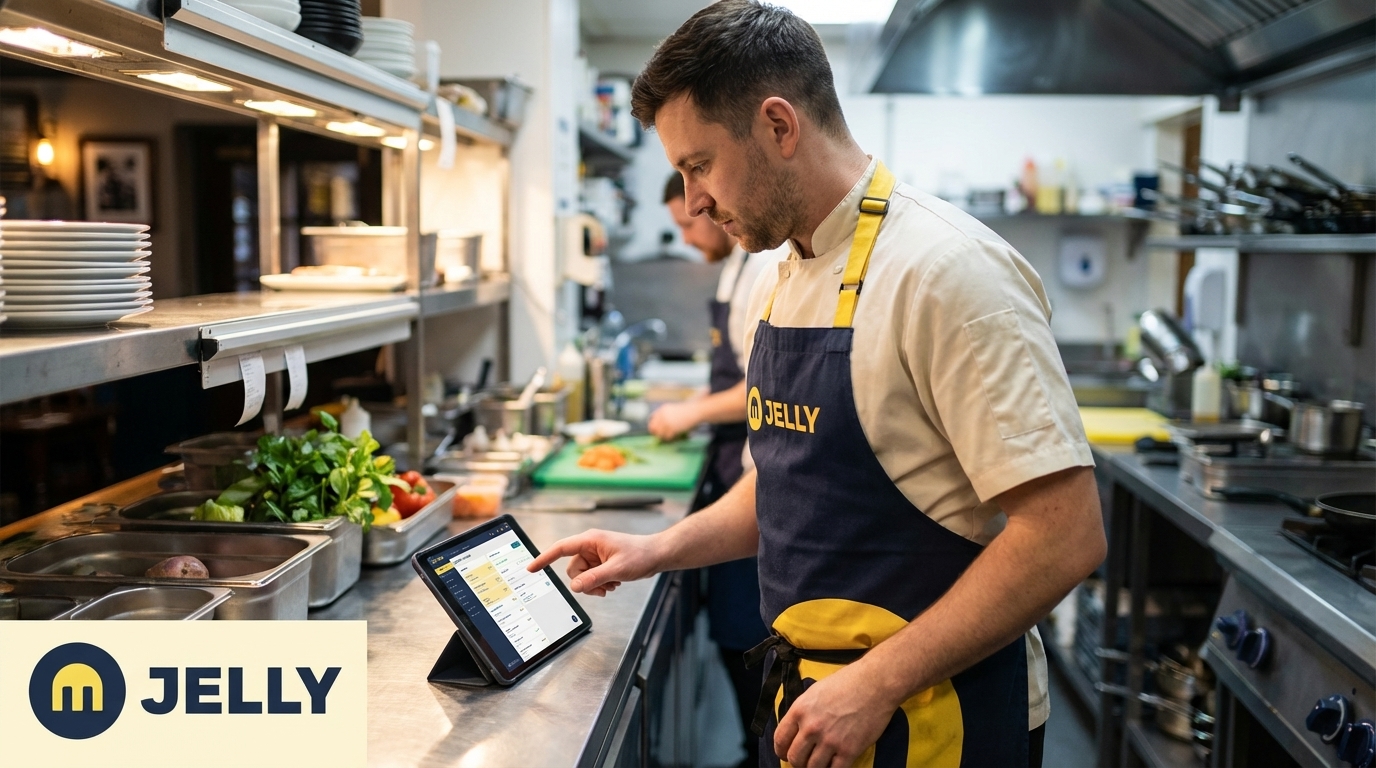
The UK hospitality sector faces sustained pressure in 2025 from rising costs and labour shortages. This guide sets out seven technology platforms that restaurants, pubs and boutique hotels can use to automate operations, gain real-time financial insight and achieve measurable cost savings and profit growth in 2025 and beyond.
Why Operational Efficiency is Non-Negotiable for UK Hospitality in 2026
The UK hospitality landscape has become increasingly demanding for restaurant owners and operators. Rising energy and food costs, combined with labour shortages where 64% of managers were actively hiring in early 2023, are creating conditions that force businesses to run on very tight margins.
Operational challenges intensify when workflows are disconnected and front- and back-of-house teams have limited shared visibility, leading to inefficiencies, over-ordering and poor service quality. Many restaurant owners operate with limited insight, relying on monthly accounting reports to understand profitability, by which time it is often too late to respond to supplier price changes or falling margins.
Many operators now treat technology as a core part of their competitive strategy. Around 79% of UK restaurateurs are investigating technologies to speed up business operations, while 85% plan to invest in AI-driven technology and automation to increase speed, reduce manual error and improve decision making.
Restaurants that will perform best in 2025 are those that move beyond manual processes and adopt integrated efficiency platforms. These systems automate routine tasks, reduce human error, provide real-time data for informed decisions and turn time-consuming back-of-house work into controlled, measurable processes.
Jelly: A Practical Platform for Kitchen Management Automation
Before looking at the wider range of restaurant efficiency platforms, it helps to understand how a focused solution like Jelly can simplify kitchen operations for growing restaurants, pubs and boutique hotels across the UK.
Jelly provides a straightforward way for growing restaurants, pubs and hotels to manage food and beverage operations by automating invoices, inventory and real-time menu profitability. It is designed for establishments with annual revenues over £500,000, often at the point of adding more locations, and reduces the time and effort spent on back-of-house administration.
Key Jelly features that support kitchen efficiency and control include:
Automated invoice scanning: Capture invoices by email or photo and upload them to Jelly’s web platform. Every line item, including quantity, SKU, price and tax, is digitised so teams can access insights and reports without manual data entry.
Live dish costing: As invoices update ingredient prices, dish costs and gross profit margins update in real time, providing instant visibility into menu profitability.
Price alert system: See which ingredient prices have gone up or down, by how much and from which supplier, giving operators data that supports supplier negotiations.
Flash report: Access daily, weekly or monthly views of gross profit margin, calculated from costs taken from invoices and sales from POS integration, for real-time financial visibility.
Restaurant teams that want to see automated kitchen management in action can book a chat to explore how Jelly supports smoother back-of-house processes.
7 Essential Platforms to Improve Restaurant Efficiency & Boost Profitability
1. Robust Invoice Automation & Cost Management Platforms to Protect Margins
Manual invoice processing remains one of the largest operational drains in UK hospitality. The traditional approach of printing invoices, entering data into spreadsheets and reconciling costs weeks later creates delays and errors that directly affect profitability.
In a typical scenario, a head chef may receive dozens of invoices each week from multiple suppliers, each with different prices for the same ingredients. Manual tracking of these price changes in spreadsheets can take 10 to 20 hours per week, time that could be spent on service or menu development. Price changes are often spotted only after they have already reduced margins for several weeks.
Advanced invoice automation platforms change this workflow by scanning every line item of incoming invoices and creating a digital record that links directly to cost tracking and profitability analysis. Real-time insight into price changes allows immediate supplier conversations and faster margin protection.
The impact can be significant. Jelly users typically cut food costs by around 3% on average within the first three months of implementation and add about 2 percentage points to gross margins. These gains result from automated data capture, consistent cost tracking and ongoing price monitoring.
For established restaurants with multiple suppliers and complex ingredient sourcing, automated invoice management acts as more than a time saver. It is essential for maintaining visibility and control over the largest variable cost in the business.
2. Integrated Inventory Management & Waste Reduction Systems for Cost Control
Food waste is one of the most controllable, yet often overlooked, drains on restaurant profit. Automated inventory management combined with predictive analytics can reduce food waste by 15% to 25%, which flows directly to the bottom line.
Traditional inventory management often relies on manual counts, guesswork about usage and reactive ordering based on what appears to be running low. This can lead to over-ordering slow-moving ingredients, running out of high-demand items and allowing stock to spoil before it is used.
Modern inventory systems integrate with POS data to compare ingredient usage with sales, providing predictive insights that help set appropriate stock levels. These platforms highlight patterns, such as which dishes sell more at weekends or how weather influences ingredient consumption, so teams can order with more accuracy and less waste.
Jelly’s Cookbook feature links live dish costing with inventory management. As chefs build recipes using ingredients captured from scanned invoices, the system automatically calculates costs, units and wastage percentages. This live connection supports data-led menu decisions that control waste and support margins.
The most effective inventory tools also include wastage tracking. Operators can see where ingredients are being lost, whether through over-portioning, spoilage or preparation errors, and then introduce targeted changes.
3. Real-time Profitability Tracking & Menu Engineering Tools for Data-Driven Decisions
Popular dishes are not always the most profitable, and assuming they are can be risky. Without real-time cost tracking, operators may only discover that best-selling items are reducing profitability after ingredient prices have moved.
Traditional menu engineering often relies on cost calculations that are only updated occasionally. A dish that appeared to deliver strong margins during the last costing exercise may now lose money if key ingredient prices have increased, yet this change may remain hidden until monthly accounts highlight the issue.
Advanced profitability tracking platforms integrate POS sales data with live ingredient costs to show true menu performance at a glance. This integration highlights which dishes contribute most to profit rather than just revenue, supporting well-informed decisions about pricing, promotion and menu layout.
The impact of real-time profitability tracking is illustrated by Ruth Seggie, Owner of The Howard Arms, who said, “Our accountant said we would be lucky to hit 60% gross profit. After using Jelly, we reached 80%. Now I sleep better knowing my costs are under control and can react instantly, not weeks later.”
Modern menu engineering tools also show the best balance of high-margin and popular items. Operators can design menus that align customer appeal with profitability, promoting high-margin dishes and either repositioning or reformulating items that generate lower returns.
4. Advanced Workforce Management & Scheduling Platforms for Labour Optimisation
Labour is the largest controllable expense for most restaurants, yet many businesses still use intuition-based scheduling. This can lead to overstaffing during quiet times and understaffing during peak periods. Advanced analytics now support closer alignment between staffing levels and customer demand, improving efficiency while controlling labour costs.
The ongoing labour shortage in UK hospitality intensifies this challenge. With 64% of managers actively hiring, operators need to maximise productivity from existing teams while maintaining appropriate coverage across all service periods.
AI-powered staff scheduling systems are increasingly used for demand forecasting and workforce optimisation. They move beyond simple rota tools to predictive scheduling that considers historical sales, seasonal trends and special events.
These platforms use POS data to pinpoint peak service times, seasonal shifts and the relationship between staffing levels and customer satisfaction metrics.
The most advanced workforce tools also track individual productivity, highlight training needs and support better task allocation based on staff strengths and experience. This data-led approach helps keep labour costs in line while supporting consistent service quality.
5. Connected Point-of-Sale (POS) & Customer Ordering Systems to Enhance Service
The point-of-sale system acts as the central hub for restaurant operations, recording every transaction and many customer interactions. Modern POS platforms, including self-service kiosks and mobile ordering, speed up service, reduce errors and increase table turnover and customer satisfaction.
The full value of a modern POS extends beyond payment processing. The most effective setups connect POS systems with back-of-house platforms, creating a shared data source for inventory management, profitability analysis and demand forecasting.
Self-service kiosks, mobile applications and automated ordering systems reduce waiting times and minimise human errors. This improves the guest experience and allows staff to focus more on food quality and service. These tools also capture detailed customer preference data that can inform menu development and targeted marketing.
Integration between POS and kitchen management systems matters especially for operators with multiple locations. Operational inefficiency often stems from disconnected workflows between front- and back-of-house teams, so unified data platforms become important for visibility.
Leading POS systems now provide real-time reporting on sales performance, popular items and peak service times. This information supports better decisions about staffing, inventory levels and menu optimisation.
6. Integrated Accounting & Financial Reporting Solutions for Faster Clarity
Traditional accounting processes can create a long delay between daily decisions and financial visibility. Many operators rely on monthly reports from accountants to gauge profitability, yet by the time these arrive, potential issues may have already built up for several weeks.
This delay is especially challenging when ingredient prices change frequently and margins stay under pressure. Waiting four to six weeks for clear numbers means supplier price increases, underperforming menu items or operational inefficiencies may reduce profit for an entire month before anyone notices.
Integrated accounting solutions reduce this lag by linking operational data directly with financial reporting systems. Instead of entering invoice details manually and reconciling transactions weeks later, these platforms automate the financial workflow from invoice capture through to reporting.
Jelly supports this approach with one-click push functionality that sends digitised invoice data into compatible accounting software. This automation saves time and delivers faster financial insight so operators can act sooner.
The most effective integrated accounting tools also provide real-time dashboards that display key metrics such as gross margins, food cost percentages and cash flow on a daily or weekly basis. This timely view allows operators to identify and address issues while they are still manageable, rather than after they have caused lasting damage.
7. AI-Driven Demand Forecasting & Business Intelligence for Predictive Insights
AI-driven tools that use reinforcement learning frameworks and predictive analytics are improving demand forecasting, delivery workload distribution and personalised customer engagement. These technologies build on basic automation and move restaurants towards more predictive operations.
Traditional demand forecasting often relies on averages and simple seasonal patterns. AI-powered systems can instead uncover complex relationships between weather, local events, marketing campaigns and customer behaviour that manual analysis is likely to miss. This level of detail supports more accurate inventory ordering, staff scheduling and menu planning.
AI helps operators streamline manual tasks, reduce costs and improve efficiency as margins shrink, while also providing insights that inform strategic decisions about menu development, pricing and potential expansion.
Adoption of AI-driven solutions is increasing across UK hospitality. Around 85% of UK restaurants plan to invest in AI-driven technology, recognising that predictive insight offers a clear advantage in a demanding market.
Leading AI platforms for restaurants can predict customer demand with high accuracy, adjust menu pricing based on ingredient costs and demand patterns, and even suggest new dishes based on ingredient availability and guest preferences. This depth of business intelligence shifts restaurant management from reacting to problems towards identifying and acting on opportunities.
Operators who want to explore how intelligent automation could support their restaurant can book a chat and discuss how platforms like Jelly contribute to better efficiency and profitability.
Comparing Leading Restaurant Efficiency Platforms
Restaurant operators gain clarity when they compare how different platforms handle key functions. The following comparison highlights important differences between leading solutions:
|
Feature |
Jelly |
Traditional Competitors |
Manual Methods |
|
Real-time Dish Costing |
Yes, automatic updates |
Limited, often delayed |
Manual, time-consuming |
|
Automated Invoice Scanning |
Yes, every line item |
Semi-manual processes |
No, fully manual entry |
|
Price Alerts |
Yes, instant notifications |
Some, basic alerts |
No, reactive discovery |
|
Quick Onboarding |
Yes, under 1 week |
No, often months |
N/A, no setup required |
The main differentiator between platforms is usually the balance between functionality and complexity. Broad, feature-rich systems can be powerful, but they often involve long implementation projects and ongoing administration that delay time to value for busy operators.
Jelly focuses on simplicity and quick value delivery, which suits growing restaurants, pubs and boutique hotels that need rapid implementation and clear results rather than complex feature sets that require dedicated administrative support.
Frequently Asked Questions about Restaurant Efficiency Platforms
Is adopting new technology complicated for my existing kitchen staff?
Initial training is required for any new system, but modern restaurant efficiency platforms are usually designed for ease of use, so they remain accessible even for staff who have limited confidence with technology. Choosing platforms that prioritise simple, intuitive design over rarely used advanced features makes adoption easier.
Successful adoption depends strongly on user interface design and onboarding. Effective solutions provide clear guidance and focus on automating complex processes rather than expecting users to learn complicated workflows. Staff resistance often falls quickly once team members see practical benefits in their daily work, such as faster invoice processing or instant access to dish costs.
Change management works best when key staff are involved in platform selection, training is concise but thorough and new systems are introduced in stages rather than all at once. When handled in this way, technology tends to simplify daily operations rather than make them harder.
How quickly can I expect to see ROI from investing in these efficiency platforms?
Return on investment timelines vary with platform complexity and implementation approach, but well-designed tools typically deliver noticeable value within the first month. The quickest returns come from platforms that automate existing manual tasks instead of demanding entirely new workflows.
Automated invoice scanning, for example, creates immediate value by removing manual data entry, while real-time cost tracking supports rapid margin protection from day one. Many operators report measurable improvements in food cost control within the first few weeks, once they gain visibility of supplier price changes and menu profitability.
The main drivers of ROI include reduced administrative time, often 10 to 20 hours saved per month, tighter food cost management, often 2% to 3% cost reduction, and better decision making that avoids expensive mistakes. Platforms that combine multiple functions, such as invoice automation, cost tracking and profitability analysis, tend to deliver stronger and faster returns than single-purpose tools.
Can these platforms integrate with my existing POS and accounting systems?
Modern restaurant efficiency platforms are generally built to integrate with existing technology, as replacing an established POS or accounting system can be disruptive and costly. Effective platforms include robust integration with major POS systems and accounting tools so operators can see unified data and run smoother processes.
Integration capabilities differ between providers, so it is important to confirm compatibility with your current systems before committing. Leading platforms often support widely used POS options such as Square, along with several common accounting software packages.
The value of integration goes beyond basic data transfer. Strong integrations enable unified reporting, automated reconciliation and connected workflows. When set up correctly, efficiency platforms enhance existing systems by adding insight and automation, while staff continue working with familiar interfaces.
What should I look for when evaluating restaurant efficiency platforms?
The most useful evaluation criteria focus on practical delivery rather than long feature lists. Platforms should demonstrate fast time to value, strong integration options and reliable support during onboarding and ongoing use.
Important technical capabilities include robust POS integration, automated data capture, real-time reporting and smooth accounting connectivity. Ease of use and implementation speed often matter more than advanced features that may go unused in day-to-day operations.
Cost structure also deserves close attention. Transparent, predictable pricing tends to work better than complex variable charges that can escalate unexpectedly. Many operators prefer fixed monthly fees that scale in a clear way with business growth instead of per-user or per-transaction models that make budgeting harder.
How do I ensure successful platform adoption across my team?
Successful platform adoption depends on clear communication about benefits, focused training and ongoing support that addresses real-world challenges. Identifying key team members as early advocates can help encourage wider take-up.
Implementation usually works best when businesses start with platforms that deliver immediate, noticeable benefits to daily tasks. Once staff see faster invoice processing, easier reporting or instant access to dish costs, they are more likely to support extended use of the system.
Ongoing support is particularly important in the first few months. Operators benefit from platforms that provide dedicated customer success resources, clear training materials and responsive technical help so questions are resolved quickly without disrupting service.
Conclusion: Unlock Your Restaurant’s Full Profit Potential with Efficiency Platforms
The challenges facing the UK hospitality sector, from rising costs to labour shortages, require lasting changes in how restaurants operate. Operators who succeed in 2025 and beyond are likely to be those who adopt integrated technology platforms that automate manual work, deliver real-time insight and support proactive decisions.
Individual tools each provide specific benefits, but the strongest results come from integrated solutions that address several back-of-house processes at once. Combining automated invoice processing, real-time cost tracking, connected inventory management and integrated accounting delivers efficiencies that extend well beyond the effect of any single improvement.
The decision facing restaurant operators is less about whether to adopt efficiency platforms and more about which platforms to choose and how quickly to implement them. With 79% of UK restaurateurs exploring efficiency technologies and 85% planning AI-driven investments, competitive advantage will sit with those who act early and select tools that deliver clear, rapid value.
Established restaurants, pubs and boutique hotels that want to improve performance can focus on automation that removes manual administrative tasks, real-time visibility of costs and profitability, and data-led decisions that safeguard and grow margins in a demanding market.
Operators ready to increase efficiency and profitability in their kitchen operations can book a chat to explore how automated kitchen management with Jelly can support better performance.