
Key Takeaways
- Manual food costing and inventory processes reduce profit by introducing errors, delaying insights, and hiding issues until it is too late to act.
- Automated food cost calculators with inventory tracking give real-time visibility on prices, margins, and stock, which supports faster, more accurate decisions.
- Core features such as invoice scanning, live dish costing, price alerts, and integrated inventory help teams cut waste and protect gross profit.
- Linking purchasing, POS, and accounting data creates clear reporting that supports better supplier negotiations and frees management time for growth.
- Jelly offers a purpose-built food cost calculator with inventory tracking for growing operators; book a chat to see it in action.
The Problem: Why Manual Food Costing Hurts Your Restaurant’s Bottom Line
The UK hospitality sector faces sustained pressure in 2026. Rising employment costs, volatile energy prices, and elevated food inflation squeeze margins for restaurants, pubs, and boutique hotels. With 31% of UK hospitality operators running at a loss in Q1 2025, reliance on manual food costing and inventory is now a significant operational risk.
The Hidden Drain: Manual Invoice Processing and Delayed Insights
Manual invoice processing often takes 10–20 hours of management time each month while introducing errors and delaying critical cost information. Supplier price changes may only surface when spreadsheets are updated or when accountants share monthly reports, long after opportunities for negotiation or credit notes have passed.
These delays also affect pricing and menu decisions. Incomplete or outdated cost data forces finance leaders and chefs to work on assumptions. With 73% of hospitality operators struggling financially, this lack of accuracy is no longer viable.
The Price Volatility Trap: Outdated Dish Costing and Lost Profit
Traditional dish costing with spreadsheets requires detailed tracking of SKUs, suppliers, pack sizes, and yields. A dish that appears profitable at the start of the week may lose money by the weekend, yet the impact often remains invisible until management accounts arrive.
Manual costing methods often ignore yields, waste, and labour, so menu profitability reports mislead decision-making. Senior chefs spend valuable time on calculations instead of food quality, consistency, and team coaching.
The Inventory Gap: Invisible Stock and Profit Leaks
Poor inventory tracking leads to avoidable waste, stockouts, rushed emergency orders, and limited visibility of theft or spoilage. Without up-to-date stock and usage data, operators cannot see where costs drift or which products drive unnecessary waste.
Pressure peaks during busy trading periods. Accurate stock information supports smooth service, protects revenue, and reduces last-minute substitutions that frustrate guests.
The Cost of Inaction for UK Hospitality
The wider environment increases the impact of these process gaps. The UK has seen an average of 62 net hospitality closures per month since March 2020, with the sector now significantly smaller than before the pandemic. Higher rateable values, alcohol duties, and frozen tax thresholds intensify pressure on both operators and guests.
With many operators holding limited cash reserves, each percentage point of gross profit margin becomes crucial. Manual methods that once felt manageable now threaten long-term viability.
The Solution: How an Integrated Food Cost Calculator with Inventory Tracking Helps
An integrated food cost calculator with inventory tracking replaces reactive spreadsheets with real-time information. This type of system links purchasing, recipes, and stock levels so teams can see the financial impact of decisions as they happen, not weeks later.
Manual vs Automated: Food Cost Management at a Glance
|
Feature |
Manual Spreadsheets and Paperwork |
Integrated Food Cost Calculator |
Impact on Business |
|
Invoice processing |
Slow, repetitive, error-prone |
Digitised from email or photo, structured data |
10–20 hours saved monthly |
|
Dish costing |
About 28 minutes per item, often outdated |
About 3 minutes per item, live ingredient prices |
Around 90% time reduction |
|
Inventory tracking |
Occasional counts, limited accuracy |
Linked to purchasing and usage |
Lower waste and fewer stockouts |
|
Price updates |
Spot checks, slow to detect changes |
Automatic alerts on every price change |
Faster negotiations and credit recovery |
Introducing Jelly: A Smart Food Cost Calculator for Growing Businesses
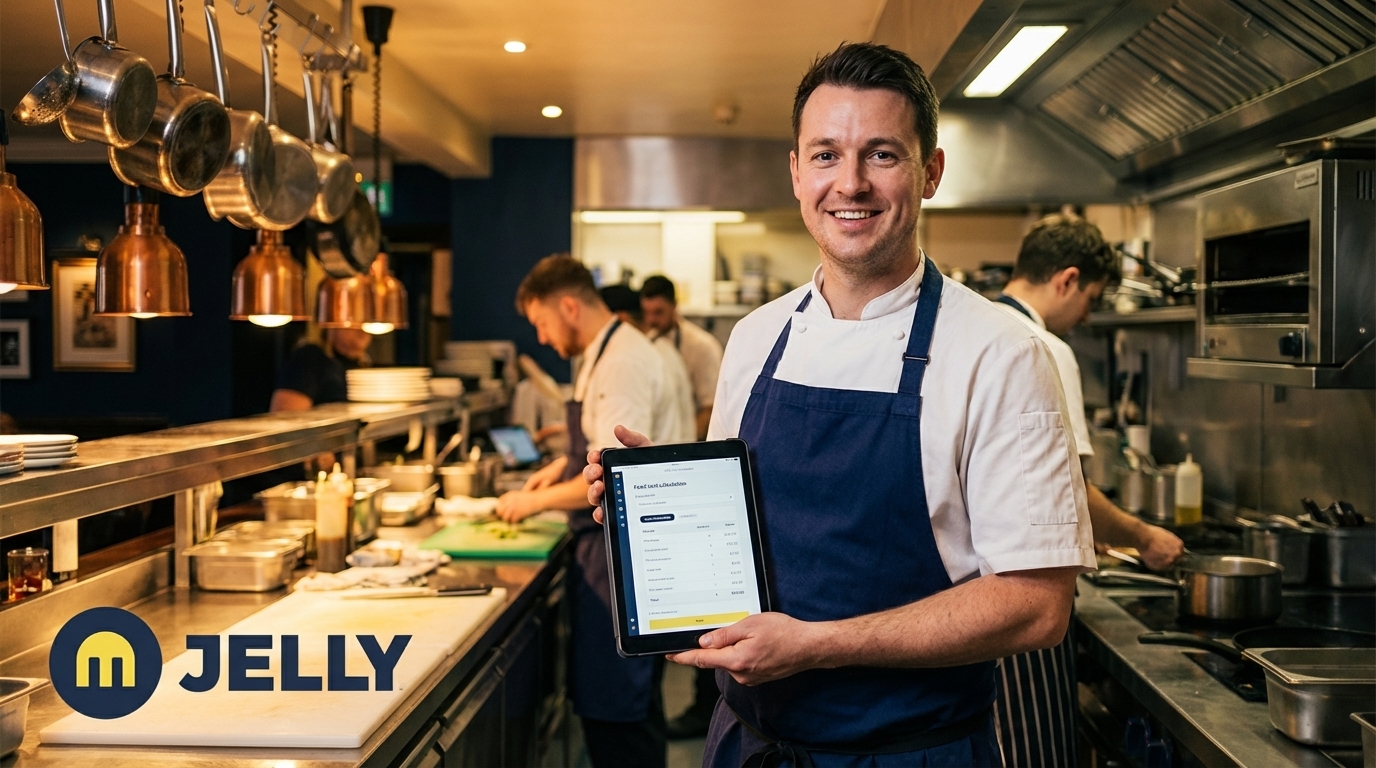
Jelly focuses on making food cost control practical for growing restaurants, pubs, and boutique hotels. The platform combines automation for complex back-of-house tasks with an interface that works for busy chefs and managers who do not have time for lengthy training.
Key Features of Jelly’s Food Cost Calculator and Inventory Tracking
Automated invoice scanning captures invoices from email or photos and converts every line into structured data such as SKU, quantity, unit, and tax. This creates a reliable, searchable record of spend without manual typing and reduces the risk of data entry errors.
Live dish costing allows chefs to build recipes from ingredients already loaded from invoices. Jelly manages unit conversions, yields, and waste factors, and updates dish costs and GP margins each time a new invoice arrives. A task that once took close to half an hour in a spreadsheet can take only a few minutes.
Real-time price alerts flag every ingredient price movement and show the change by supplier. This information supports confident supplier conversations, helps teams claim credits, and reduces the chance that cost spikes go unnoticed.
Integrated inventory management links purchase data with stock usage. Teams can see where waste appears, which products move slowly, and where to reduce par levels. This turns stock from a guess into a managed cost centre.
Accounting integration enables one-click export of approved invoices into accounting tools such as Xero. This reduces bookkeeping time and minimises errors that affect supplier statements and cash flow.
To see how this works in practice, book a chat with Jelly.
Protect Margins: How Jelly Improves Kitchen Operations
Gain Clear Financial Control with Real-time Flash Reports
Jelly’s Flash Reports combine purchasing data with sales information from integrated POS systems. Operators can see daily, weekly, or monthly gross profit based on actual invoice prices rather than standard costs. When margins drift, the impact appears quickly, so leaders can review recipes, pricing, or portion control before losses escalate.
Make Dish Costing Easier for Your Team
The Kitchen section gives chefs a simple way to create and maintain recipes. Ingredients load directly from invoices, and the system calculates cost per portion, yields, and GP in the background. Visual indicators highlight dishes whose margins fall below targets, so teams can adjust recipes or prices with clear financial context.
Negotiate Better with Suppliers Using Price Alerts
Price Alerts record historic and current prices by product and supplier. Chefs and buyers see which products have increased, by how much, and when. This evidence supports structured conversations about alternative products, volume deals, or credits and moves relationships toward transparent, data-led agreements.
Streamline the Back Office and Reclaim Time
Automation of invoice capture, data entry, and inventory calculations frees managers from repetitive admin. Many teams recover 10–20 hours per month that can move into training, menu development, or guest experience. Even modest improvements in GP, combined with time savings, can materially improve performance in a low-margin sector.
Frequently Asked Questions (FAQ) About Food Cost Calculators
How quickly can operators see results with a food cost calculator like Jelly?
Jelly usually begins adding value within the first week. Once suppliers send invoices to the dedicated Jelly email address, or teams upload photos, the system starts to generate price alerts and spend summaries. Many businesses see food cost reductions of around 3% and GP improvements of about two percentage points within the first three months, driven by better visibility and simpler control.
Is a food cost calculator with inventory tracking suitable for smaller operators?
Jelly works well for growing independent sites as well as groups. Operators with annual revenue above £500,000, including single sites preparing to expand, often gain strong value because they face complex purchasing and menu decisions but may not have a large finance team. The platform offers detailed control without needing dedicated IT support.
What integrations does Jelly offer with existing restaurant systems?
Jelly connects with POS systems such as Square and ePOSnow to import sales data and with accounting tools such as Xero to export invoices. These links support accurate Flash Reports, menu performance analysis, and smoother month-end processes, without double entry of data.
Conclusion: Replace Guesswork with Data-led Food Cost Control
Manual food costing and inventory tracking no longer match the realities of UK hospitality in 2026. Rising input costs, tight labour markets, and limited cash reserves mean that slow, inaccurate processes place avoidable pressure on already thin margins.
An integrated food cost calculator with inventory tracking provides a structured way to control purchasing, recipes, and stock in real time. Jelly gives growing operators practical tools and insights to manage costs, protect profit, and support expansion with clearer financial information.
To take back control of ingredient costs and kitchen performance, see how Jelly can automate your kitchen management.