
Key Takeaways
- UK hospitality faces 3.8% food inflation in 2026, and manual GP calculators delay margin insights until monthly reports.
- Target GP margins are 65-70% for restaurants, 70-75% for pubs, and 60-70% for hotels, following the 30/30/30/10 profitability rule.
- Manual Excel tools demand 10-20 hours of weekly updates and become error-prone during periods of supplier volatility.
- Jelly automates invoice scanning for real-time dish costing, typically boosting GP by 2 points and saving £3-4k each month.
- Upgrade to Jelly for automated GP tracking, and book a demo today to cut food costs.
Manual GP Calculators: How They Work and Where They Fail
The standard GP margin formula for UK hospitality is: GP% = ((Selling Price – Cost Price) / Selling Price) x 100. Calculations use VAT-exclusive figures because VAT is reclaimable on purchases and added separately to sales.
GP Margin Formula:
GP% = ((Selling Price – Cost Price) / Selling Price) × 100
Example: a £10 selling price and £3 cost gives ((£10 – £3) / £10) × 100 = 70% GP.
Manual calculators, whether Excel spreadsheets or basic online tools, need constant data entry for every ingredient price change. With UK food prices rising 5.7% through 2025 and supplier volatility increasing, manual entry creates dangerous delays. A dish that made money last week can lose money today, and manual systems only reveal this once someone updates every ingredient cost.
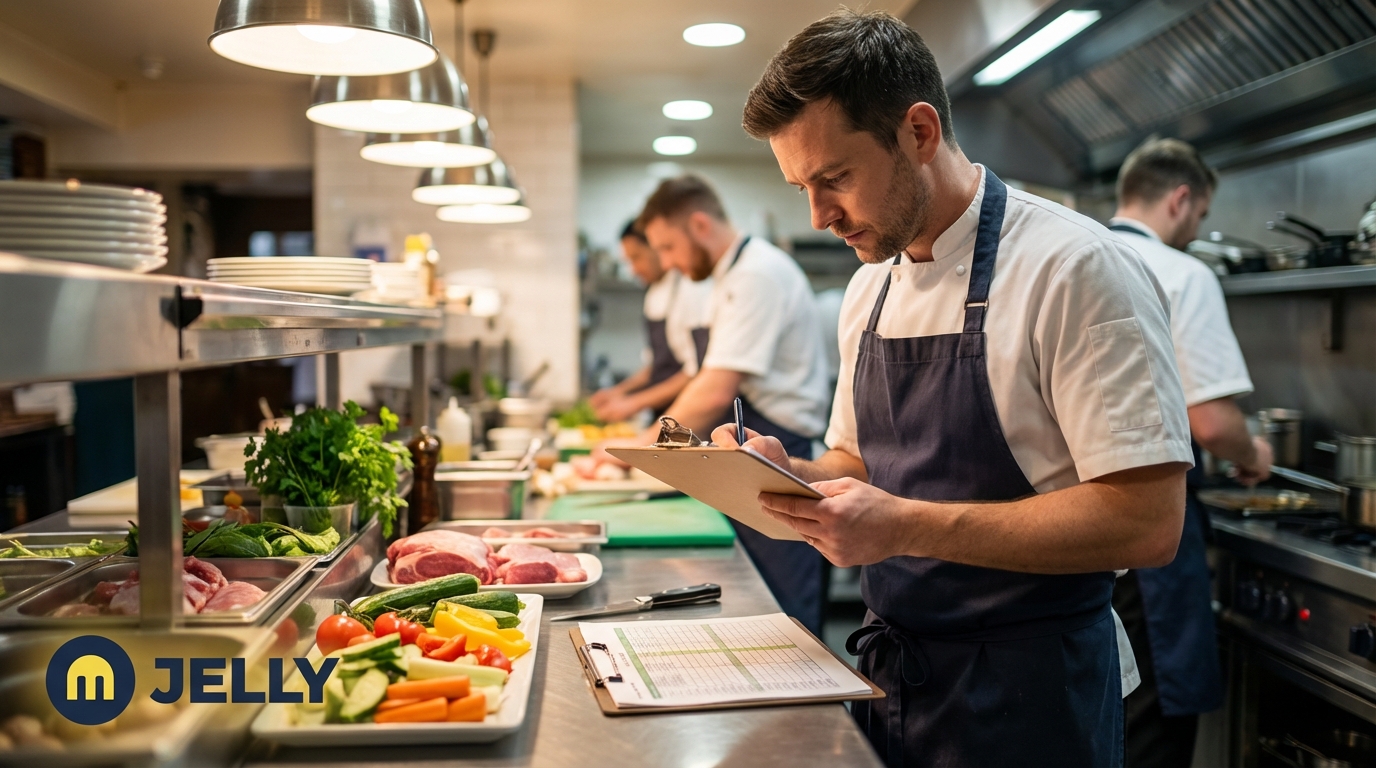
The average chef spends 28 minutes costing a single menu item using spreadsheets, often checking dozens of SKUs from multiple suppliers. Across a full menu, manual costing consumes 10-20 hours each week. That time is better spent on kitchen operations, training, and customer experience.
UK GP Benchmarks for Restaurants, Pubs and Hotels
Clear GP benchmarks show whether your current margins need attention. Here are the current UK hospitality GP targets for 2025-2026.
|
Venue Type |
Ideal GP% |
Food Cost% |
Key Notes |
|
Restaurants |
65-70% |
30-35% |
Standard for table service |
|
Pubs |
70-75% |
25-30% |
Higher margins on drinks |
|
Hotels |
60-70% |
30-40% |
Varies by service level |
Beverages usually achieve higher margins than food. Coffee often reaches 75%+ GP, and alcoholic drinks can reach 85% GP. If your GP sits below these benchmarks, high food costs are probably eroding profitability.
Fine dining venues may run slightly lower GP percentages because of premium ingredients and higher service standards. Fast-casual concepts often achieve higher margins through simpler menus, faster service, and lower labour costs per transaction.
The 30/30/30/10 Rule for Profitable UK Hospitality Sites
The 30/30/30/10 rule allocates 30% of revenue to food costs, 30% to labour, and 30% to overheads, leaving 10% as profit margin. This framework gives UK restaurants, pubs, and hotels a simple structure for balanced costs.
Different venue types still need tailored ratios. Pubs often achieve lower food cost percentages, around 20-25%, because drinks carry higher margins. Fine dining restaurants may need around 35% each for food and labour, driven by premium ingredients and larger teams.
Consistent monitoring of these ratios protects margins more effectively than waiting for monthly reports. When food costs creep above 30-35%, quick action prevents further erosion. Use GP calculators to check that your current ratios match your profitability targets.
Manual Tools vs Competitors vs Jelly for Cutting Food Costs
Static calculators and spreadsheets struggle during periods of supplier volatility. The table below compares common approaches used by UK hospitality operators.
|
Feature |
Manual/Excel |
Competitors |
Jelly |
|
Real-time Updates |
Manual entry only |
Partial automation |
Automatic invoice scanning |
|
Setup Time |
Immediate but limited |
4-8 weeks |
1 week to full value |
|
Cost per Location |
Free but time-intensive |
£200-500/month |
£129/month flat rate |
|
Margin Impact |
Often negative due to errors |
1-2% improvement |
2 percentage points GP boost average |
Manual systems create a false sense of saving money. Excel appears free, yet the 10-20 hours spent weekly on data entry often cost more than automation once management time is included. Errors from outdated pricing data can quietly remove thousands of pounds in margin each month.
Competitors such as MarketMan and Nory provide automation but often require long setup periods and complex workflows. Busy kitchen teams can feel overwhelmed, and per-user pricing models become expensive as teams grow.
Jelly automates invoice scanning, price alerts, and real-time dish costing within one week of setup. Stuart Noble, Head Chef at Cairn Lodge Hotel, explains the impact: “Price hikes were crushing our margins. I felt helpless. With Jelly, every dish cost is up-to-date at my fingertips. We slashed food costs by 5% in a month.”
The Amber restaurant case study shows similar results, with consistent £3-4k monthly savings. These gains come from automated price alerts, stronger supplier negotiations, and tighter menu controls. Schedule a chat to see how automation transforms your GP tracking.
How Owners and Chefs Use GP Data Differently
Restaurant owners need real-time dashboards that show GP performance across multiple sites without waiting for monthly accounting reports. Delayed financial data means margin problems only appear weeks later, when fixing them usually costs more.
Executive chefs need live margin data during supplier negotiations and menu planning sessions. When ingredient prices spike, immediate visibility supports quick choices such as switching suppliers, adjusting portions, or increasing menu prices before margins fall further.
Both owners and chefs gain from automated systems that remove manual data entry and surface clear actions. The main difference lies in presentation, as owners want high-level profitability trends, while chefs need ingredient-level detail for daily operational decisions.
Frequently Asked Questions
How do you calculate GP margin for UK restaurants?
Use the formula GP% = ((Selling Price – Cost Price) / Selling Price) × 100. Work with VAT-exclusive figures because VAT is reclaimable on purchases. For example, a £12 dish that costs £3.60 in ingredients achieves 70% GP, since ((£12 – £3.60) / £12) × 100 = 70%.
What is the average gross profit margin for restaurants in the UK?
UK restaurants usually target 65-70% GP margins, and pubs often reach 70-75% because of higher-margin drinks sales. Hotels typically range from 60-70% depending on service level. Margins below 60% suggest high food costs that need rapid action through supplier negotiations or menu engineering.
Can I use GP calculators for drinks margins?
You can apply the same formula to beverages, although target margins differ from food. Coffee often achieves GP margins above 75%, and alcoholic drinks frequently reach around 85% GP. Wine margins vary with markup strategy, usually ranging from 65-80% depending on price point and venue type.
What is the best GP calculator Excel template for UK hospitality?
Free Excel templates handle basic calculations but need constant manual updates during volatile pricing periods. Templates quickly become time-intensive and error-prone when you manage multiple suppliers and hundreds of ingredients. Automated solutions such as Jelly remove manual entry and maintain real-time accuracy.
How often should I recalculate dish margins?
With current food inflation, weekly recalculation is the minimum for accurate margins. Automated systems go further by updating margins with every new invoice, so you see changes as soon as supplier prices move. This real-time view supports proactive decisions instead of late damage control.
Conclusion: Move from Manual GP Calculators to Jelly
Manual GP calculators and static spreadsheets cannot keep pace with the volatile cost environment of 2026. Basic calculations still matter, yet real protection of profitability now depends on automated systems that refresh margins with every supplier invoice.
If your current GP margins sit below UK benchmarks of 65-70% for restaurants and 70-75% for pubs, manual tools will struggle to fix rising cost pressure. Jelly’s automated invoice scanning, price alerts, and real-time dish costing help UK hospitality operators cut food costs by around 3% on average while saving 10-20 hours each week on manual work.
The choice is clear. You can keep wrestling with spreadsheets and delayed insights, or you can automate GP tracking and protect your margins. Book a demo to schedule a chat and see how Jelly turns GP tracking from time-consuming guesswork into reliable, automated profitability protection.