
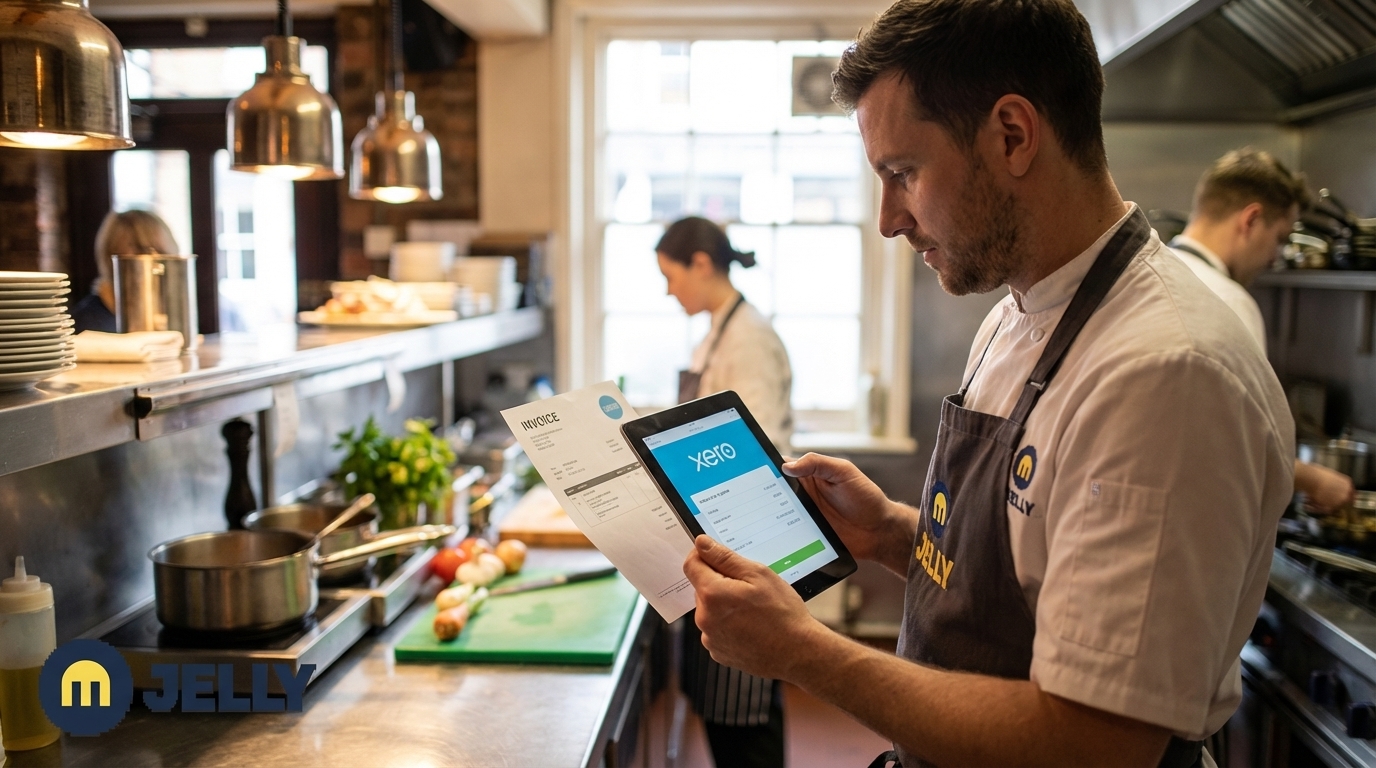
Key Takeaways
- Automated invoice scanning with Xero reduces manual data entry and speeds up accounts payable for restaurants, pubs, and hotels.
- Line item data supports accurate menu costing, supplier negotiations, and fast responses to ingredient price changes.
- Integrated tools centralise multi-site financial data so owners and finance teams can see margins and cash flow in near real time.
- Clear goals, simple workflows for kitchen teams, and stakeholder alignment help invoice scanning projects succeed.
- Jelly connects invoice scanning with Xero and kitchen operations to protect margins, book a chat to see how it works.
Setting the Stage: Why Automated Invoice Scanning is Your Next Strategic Priority
Hospitable businesses that grow beyond a single site soon find that manual invoice entry slows down finance and hides margin problems. Processes that felt manageable at one venue become error prone and expensive when multiplied across suppliers and locations. Cloud platforms such as Xero give a strong foundation for digital finance, but without automated invoice capture many teams still work in slow, reactive reporting cycles.
Real-time cost and margin data supports faster menu, pricing, and purchasing decisions. In a sector where small changes in gross profit can decide whether a site stays open, automated invoice scanning turns invoices from a historic record into a live source of financial insight.
See how Jelly can automate your kitchen management. Book a chat.
The Operational Framework: Understanding Invoice Scanning Integration with Xero
What is Automated Invoice Scanning?
AI-based OCR tools can reach more than 99% accuracy when extracting invoice data, covering supplier details, dates, line items, quantities, unit prices, and tax. Capture routes include mobile photos, email forwarding, and direct supplier feeds, so teams can send invoices into the system with minimal friction. Detailed line item extraction then turns each invoice into structured data for tracking prices and margins.
Why Xero Integration Matters for Hospitality
Xero connects with thousands of banks and financial institutions, which gives finance teams clear, current visibility of cash and liabilities. Direct integration from invoice scanning into Xero removes repeated data entry, fills purchase ledgers automatically, and keeps supplier records consistent. This setup supports timely reporting instead of waiting for month-end accounts.
How Integration Centralises Financial Control
The strongest impact appears when invoice scanning tools sit at the centre of a wider control system. Some platforms support three-way checks between orders, deliveries, and invoices, so discrepancies show up before supplier payments go out. For businesses with many suppliers and changing prices, this joined up approach turns fragmented processes into structured, data-led supplier management.
Industry Landscape: The Evolution of Invoice Management in Hospitality
From Manual Entries to Intelligent Automation
Many operators still rely on paper invoices and spreadsheets, which can cost 10 to 20 hours of admin time each week and often introduce keying errors. Modern automation reduces this workload and also shifts finance from a backward-looking record into a forward-looking control system that supports daily decisions.
Key Players and Solution Categories
Current solutions fall into three broad groups. Native Xero tools such as Hubdoc focus on document capture and standard extraction. Dedicated tools such as Dext provide stronger automation for complex invoices. Hospitality-specific platforms such as Jelly add features for recipe costing, price alerts, and margin reporting that sit between finance and kitchen operations.
Current Trends Driving Adoption
Recent inflation and supply chain volatility have made precise cost tracking more important for every venue. Multi-site groups now look for consolidated reporting with enough detail to understand performance by site and by product, which drives interest in integrated, real-time solutions.
Strategic Considerations and Trade-offs for Implementation
Build vs Buy: Assessing Your Needs
An in-house build demands development skills, ongoing maintenance, and constant updates to stay accurate with OCR and supplier formats. Most hospitality groups gain better value from specialist platforms that are already proven, integrate with Xero, and start delivering benefits within weeks.
ROI Expectations and Success Metrics
Many businesses see a reduction of 10 to 20 hours of manual admin each month, worth roughly £200 to £400 in labour. Automated reconciliation and payment workflows also shorten payment cycles and improve cash visibility. Some operators that use real-time cost alerts and margin reporting from invoice data achieve gross profit improvements of around two percentage points.
Managing Change Across the Organisation
Staff often support new tools when they see that automation removes tedious tasks instead of adding more work. Clear training, simple capture steps, and quick wins such as fewer paper invoices on the pass help kitchens and managers adopt the system.
Critical Features for Hospitality-Specific Success
Hospitality teams benefit from accurate line item extraction, reliable Xero integration, support for multi-site groups, mobile capture, and timely reporting. Group-level approvals and multi-user access are important for larger estates. Features such as recipe costing, supplier price alerts, and dish-level margin analysis separate hospitality tools from generic invoice apps.
Jelly’s Approach: Best Practice for Integrated Invoice Scanning with Xero
Deep Integration with Xero
Jelly captures every invoice line, links products to recipes, and syncs this data with Xero so accounts payable records update automatically. Many users report that this approach cuts bookkeeping time by around 90 percent, as invoices move from kitchen to Xero with minimal manual work.
Real-Time Financial Control for Growing Operations
Jelly powers Flash Reports that combine invoice costs with POS sales data to show gross profit daily, weekly, or monthly. Price alerts highlight supplier increases as they happen, which supports early menu or supplier changes before margins erode across the group.
Workflows Designed for Busy Kitchens
Jelly focuses on straightforward capture methods such as quick photo uploads and clear screens that chefs can use between services. Kitchen teams can send invoices to Jelly in a few seconds, which keeps data complete without slowing down service or prep.
Comparison: Jelly vs Generic Invoice Solutions and Manual Processing
|
Feature |
Manual Processes |
Basic OCR Tools |
Jelly |
|
Accuracy of line item extraction |
Error-prone manual entry |
Mainly header data |
Full line item extraction |
|
Real-time costing integration |
Spreadsheet updates |
No costing integration |
Automatic recipe cost updates |
|
Hospitality-specific insights |
Limited reporting |
Simple categories |
Gross profit, price alerts, dish costing |
|
Ease of use for kitchen staff |
Paper-based filing |
Often complex |
Photo upload and simple workflows |
|
Depth of Xero integration |
Manual posting |
Basic invoice upload |
Detailed accounts payable sync and significant time savings |
See how Jelly can automate your kitchen management. Book a chat.
Implementation Readiness Assessment: Preparing Your Business for Integration
Evaluating Your Current State
Teams that process more than 50 invoices a month or spend over 10 hours a week on manual entry usually gain the fastest value. A wide supplier base and frequent price changes increase the benefits of automated price tracking and alerts.
Identifying Key Stakeholders and Their Needs
Finance teams look for accurate data and efficient approvals, owners want clear visibility of cash and margin by site, and chefs need live costing and simple tools that work within daily routines. Successful projects link the system features to these specific needs from the start.
A Phased Approach to Integration
Teams can start with invoice capture and Xero sync to secure quick time savings, then add features such as recipe costing or Flash Reports after the data flow stabilises. Jelly often begins delivering value in the first week once suppliers send invoices to the dedicated Jelly email address.
Strategic Pitfalls for Experienced Hospitality Teams
Undervaluing Granular Data
High-level spend reports by category or supplier can hide changes in individual product prices. Line-level analysis supports precise negotiation, targeted menu engineering, and removal of products that no longer meet margin targets.
Separating Operational and Financial Data
When kitchen systems and accounting tools operate in isolation, decisions on menu, pricing, and purchasing rely on old data. Integration with Xero and POS aligns operational and financial views so teams can act on current information.
Overlooking Staff Adoption
Complex tools that feel like extra admin rarely gain full use from chefs and managers. Clear training, fast capture methods, and visible wins, such as fewer spreadsheet updates, keep adoption high.
Using Generic Tools in Place of Hospitality-Specific Platforms
Generic invoice software may capture totals correctly but often lacks recipe links, dish costing, and sector-specific reporting. Hospitality-focused systems provide insights that directly support menu, rota, and purchasing decisions.
Key Points on Invoice Scanning with Xero
How automated invoice scanning with Xero supports control of food costs
Automated scanning captures each ingredient line so the latest supplier prices flow into costing tools. Price alerts warn teams when items move outside target ranges, and Jelly links these costs to recipes so live dish margins stay visible. Xero then receives accurate invoice data for financial statements.
Difficulty of connecting invoice scanning tools to an existing Xero account
Modern tools that specialise in Xero usually connect through a short authorisation process. Once linked, invoices flow into Xero without major changes to existing chart of accounts or workflows. Jelly begins to add value as soon as invoices arrive by email or photo.
Managing invoices from many suppliers and locations
Advanced platforms group invoices by site, supplier, and category while still feeding a single Xero organisation or group structure. This setup gives central oversight for owners and finance teams, and still allows site-level reporting for managers.
Accuracy of extracted data and error prevention in Xero
AI-powered OCR now handles complex line items and VAT with high accuracy, which reduces transcription errors compared with manual entry. Automated checks and structured data reduce inconsistent coding in Xero and strengthen the quality of management accounts.
Conclusion: Secure Margins and Scale with Integrated Xero Workflows
Invoice scanning that links directly into Xero gives hospitality operators faster, clearer insight into costs, margins, and cash flow. This level of control supports confident growth in 2026, even with volatile supplier prices and tight labour markets.
Jelly is built for growing kitchens and hospitality groups, turning back-of-house paperwork into simple digital workflows that protect gross profit as you add sites. Our Xero integration, Flash Reports, and price alerts help teams move from reactive fire-fighting to planned, data-led decisions.
See how Jelly can automate your kitchen management. Book a chat.