
Key takeaways
- UK restaurants, pubs, and boutique hotels face sustained food and labour inflation that continues to compress gross profit margins and limit sales growth.
- Manual kitchen management reduces visibility of real costs, introduces errors, and consumes leadership time that could support revenue-building work.
- Automated kitchen management gives real-time ingredient, dish, and menu profitability data so teams can adjust prices, menus, and purchasing quickly.
- Operators that adopt tools like Jelly typically cut food costs, increase gross profit, and release staff hours for service, marketing, and expansion.
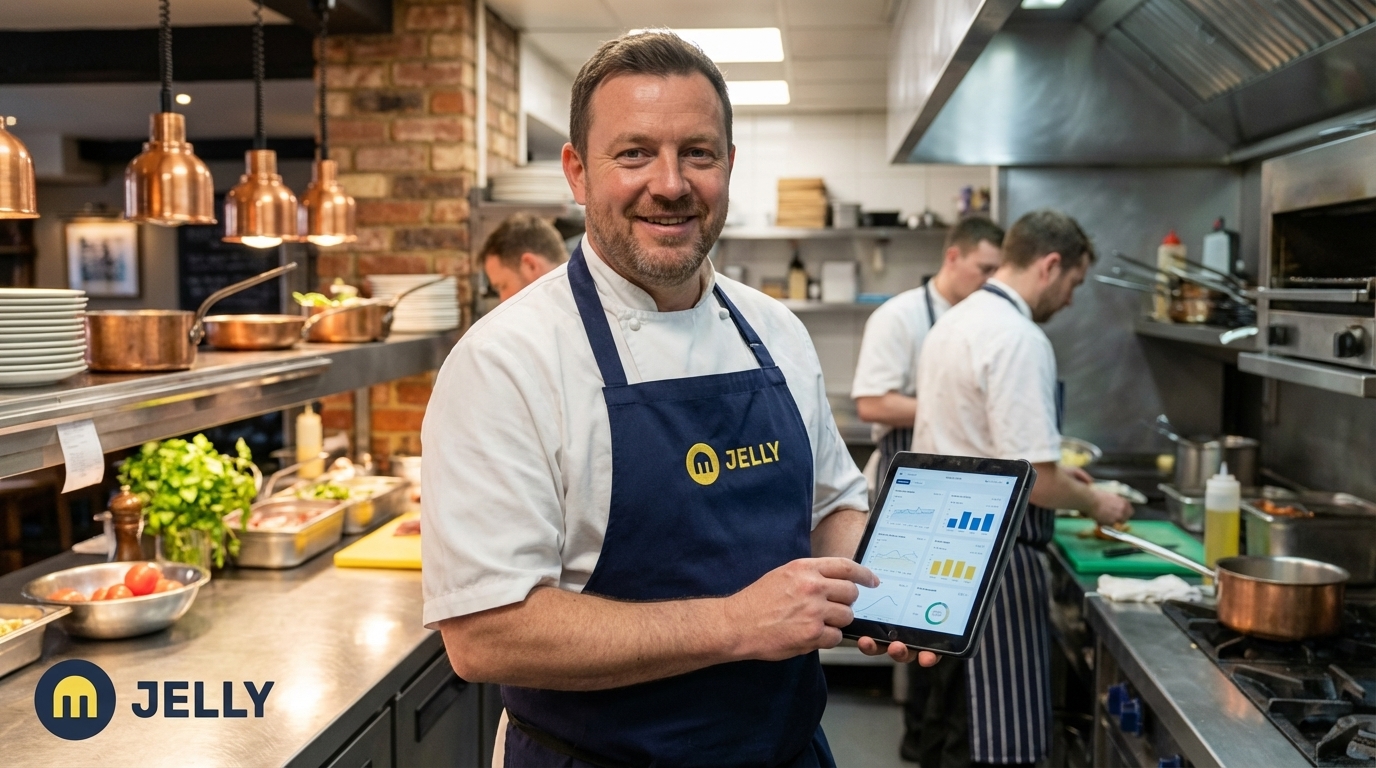
- Jelly provides automated invoice capture, live dish costing, flash GP reporting, and POS integrations that help hospitality businesses protect profit and revenue; book a chat to see how it works.
Why manual kitchen management erodes sales revenue changes
UK hospitality margins are under sustained pressure, and manual processes make the impact on sales revenue changes worse. Food inflation held at roughly 6–9% in 2024, pushing average gross margins down from 67% in 2019 to 61% in 2024. Many operators still track costs in spreadsheets or on paper, which delays decisions and hides the real effect of these shifts.
Financial markets already reflect this squeeze. UK hospitality share prices fell in 2026, with restaurant companies down about 10%, pubs and bars down 6%, and hotels down 3%. Sales growth alone no longer offsets higher costs, so control of gross profit has become central to achieving positive sales revenue changes.
Shrinking gross profit from rising costs
Margin erosion starts with core inputs. Persistent food inflation between 6% and 9% in 2024 reduced typical gross profit by six percentage points between 2019 and 2024, which equates to tens of thousands of pounds for many sites.
Labour and payroll add further pressure. Almost half of businesses report acute labour shortages, contributing to wage inflation and higher operating costs, while London hotels faced payroll cost increases of around 2.5% compared with 2019 levels by 2025. Efficient control of kitchen costs is now one of the few levers leaders fully control.
Inefficient manual processes drain profit
Manual kitchen management limits how quickly teams can react. Owners and finance managers often spend 10 to 20 hours a week on data entry, invoice reconciliation, and price checks, time that could support sales and guest experience.
Chefs face similar friction. Costing a single dish can involve dozens of SKUs, multiple suppliers, and complex batch recipes. Many teams report spending close to half an hour per item in spreadsheets. That delay makes it difficult to update prices, engineer menus, or remove unprofitable dishes before they affect sales revenue changes.
Lack of real-time visibility leads to missed revenue
Slow or incomplete data means teams often operate without a clear view of current costs. A dish that delivered strong profit last month may now lose money after quiet supplier price changes. Manual systems frequently reveal this only after period-end reporting, when losses have already built up.
Operators describe feeling “helpless, lacking control when things go south in the kitchen” and “negotiating blind” with suppliers. Decisions based on out-of-date figures reduce gross profit, weaken cash flow, and restrict the ability to invest in sales growth.
Book a chat with Jelly to see how automated cost tracking and clear reporting improve control of gross profit and revenue.
How automated kitchen management supports stronger sales revenue changes
Automated kitchen management systems give hospitality teams accurate cost and margin data without heavy manual work. These tools capture invoice lines, update recipe costs, and connect sales and purchasing data so decisions reflect current conditions in 2026, not last month.
Jelly converts complex back-of-house information into a structured, automated workflow. Teams gain clear visibility of gross profit, price changes, and menu performance, which supports better pricing, purchasing, and labour planning.
Key Jelly features that influence sales revenue changes
- Automated invoice scanning and price alerts:
- Benefit: Each supplier invoice is scanned line by line and stored automatically, and price changes are flagged. Dish costs stay accurate, so menus and prices can adjust before higher input costs erode sales revenue changes.
- Live dish costing and menu engineering:
- Benefit: Real-time gross profit for every dish shows which items are both popular and profitable. Teams can promote or adjust these dishes and refine delivery menus to support higher overall revenue per cover.
- Flash reports and accounting integration:
- Benefit: Daily gross profit visibility and integration with accounting platforms such as Xero reduce reporting delays. Owners and finance managers see the impact of decisions quickly and can steer sales strategy with current numbers.
- Sales mix analysis:
- Benefit: Integration with POS systems such as Square and ePOSnow links sales data with cost data. The system highlights star, workhorse, and loss-making dishes so menus can shift towards options that support stronger sales revenue changes.
- Streamlined operations:
- Benefit: Automation of admin tasks can reduce bookkeeping and kitchen paperwork time by up to 90%. Freed hours can move into staff training, marketing, events, and other activities that grow revenue.
See Jelly in action and explore how automated kitchen management supports your gross profit targets.
How Jelly converts gross profit control into positive sales revenue changes
Real-time cost control instead of guesswork
Jelly’s Flash Report combines invoice data with POS sales each day to show current gross profit. Operators can see when margins move, then adjust recipes, portions, or prices before the next service rather than weeks later.
Ruth Seggie, owner of The Howard Arms, summarised the effect: “Our accountant said we would be lucky to hit 60% gross profit. After using Jelly, we reached 80%. Now I sleep better knowing my costs are under control and I can react instantly, not weeks later.”
|
Feature |
Manual Spreadsheets |
Jelly Automated System |
Sales Revenue Impact |
|
Cost visibility |
Delayed and reactive |
Daily and proactive |
Reduces unnoticed margin loss |
|
Menu pricing |
Based on estimates |
Based on live cost and sales data |
Improves profit per transaction |
|
Supplier negotiation |
Limited evidence and leverage |
Clear price histories and volumes |
Supports better terms and lower costs |
|
Operational time |
High admin workload |
Significant time reduction |
Releases time for growth activity |
Menu engineering and operations that support higher revenue
Jelly’s Menu Engineering view connects recipes to live costs and sales mix. Chefs use the Cookbook feature to build or update dishes from ingredients already captured from invoices, with unit conversions handled automatically.
Stuart Noble, head chef at Cairn Lodge Hotel, reported: “Price hikes were crushing our margins, I felt helpless. With Jelly, every dish cost is up to date at my fingertips. We cut food costs by about 5% in a month.”
Automation also supports broader operational efficiency. Jelly digitises invoices through photo upload or email and syncs them with accounting software. Many customers see a 90% drop in bookkeeping time and free 10 to 20 staff hours per week for guest-facing or commercial work.
Across the customer base, Jelly users typically see gross margins increase by around 2 percentage points within three months and average food cost reductions of roughly 3%. For a restaurant with £1 million annual revenue, this can add about £20,000 in annual profit that supports reinvestment and more stable sales revenue changes.
Frequently asked questions about managing sales revenue changes
How can automated kitchen management influence my sales revenue changes?
Automated kitchen management systems provide real-time visibility of ingredient costs and dish profitability. Teams can raise or hold prices with confidence, remove loss-making items, and focus marketing on high-margin dishes. This level of control helps maintain healthy gross profit even when input prices move, as they did with the 6–9% food inflation seen in 2024.
What uplift in gross profit do operators typically see with Jelly?
Most Jelly customers cut food costs by about 3% and increase gross margins by roughly 2 percentage points in the first three months. These gains matter because average margins in restaurants and pubs fell from 67% in 2019 to 61% in 2024. One example, Amber restaurant, reports saving £3,000 to £4,000 per month through Jelly’s automation, which equates to a strong return on subscription cost.
How quickly does Jelly begin to improve results?
Jelly begins to deliver insight within the first week. Once suppliers send invoices to a dedicated email address or staff upload photos of invoices, the platform starts to surface price alerts and spending trends. Many customers see a clear improvement in gross profit within the first month, with typical three month results showing the full uplift in margin and cost reduction.
Conclusion: Use automation to drive sustainable sales revenue changes
Margin compression from 2019 to 2024, combined with ongoing food and labour inflation in 2026, means manual kitchen management now carries real financial risk. Slow cost tracking, spreadsheet errors, and limited visibility make it difficult for growing restaurants, pubs, and boutique hotels to protect profitability and invest in revenue growth.
Jelly offers a practical route to tighter control. Automated invoice capture, live dish costing, flash gross profit reporting, and POS integration give teams current data without adding workload. Customers commonly see higher margins, lower food costs, and more time to focus on guests and growth.
Ready to improve your gross profit and sales revenue changes? Book a chat with Jelly and explore how automated kitchen management can support your hospitality business in 2026.