
Written by: JJ Tan, Founder, Jelly
Key Takeaways for UK Restaurant Teams
- Food waste covers discarded edible food from over-preparation and poor portions, while spoilage makes food unsafe due to bacteria, temperature abuse, or expiry.
- Common causes include poor FIFO rotation, temperature fluctuations, and cross-contamination, often costing UK kitchens £100-300 each week per recurring issue.
- Manual spreadsheets create delays and errors, while automation with real-time tracking cuts food costs by 3-5% and lifts margins by about 2 percentage points.
- Proven tactics include FIFO, portion standardisation, temperature monitoring, supplier audits, and live dish costing for fast, measurable waste reduction.
- Scale effortlessly with Jelly’s automated invoice scanning and price alerts, and see how it works in your kitchen to protect margins and save thousands each month.
The Problem: Waste and Spoilage in Restaurants – Key Differences
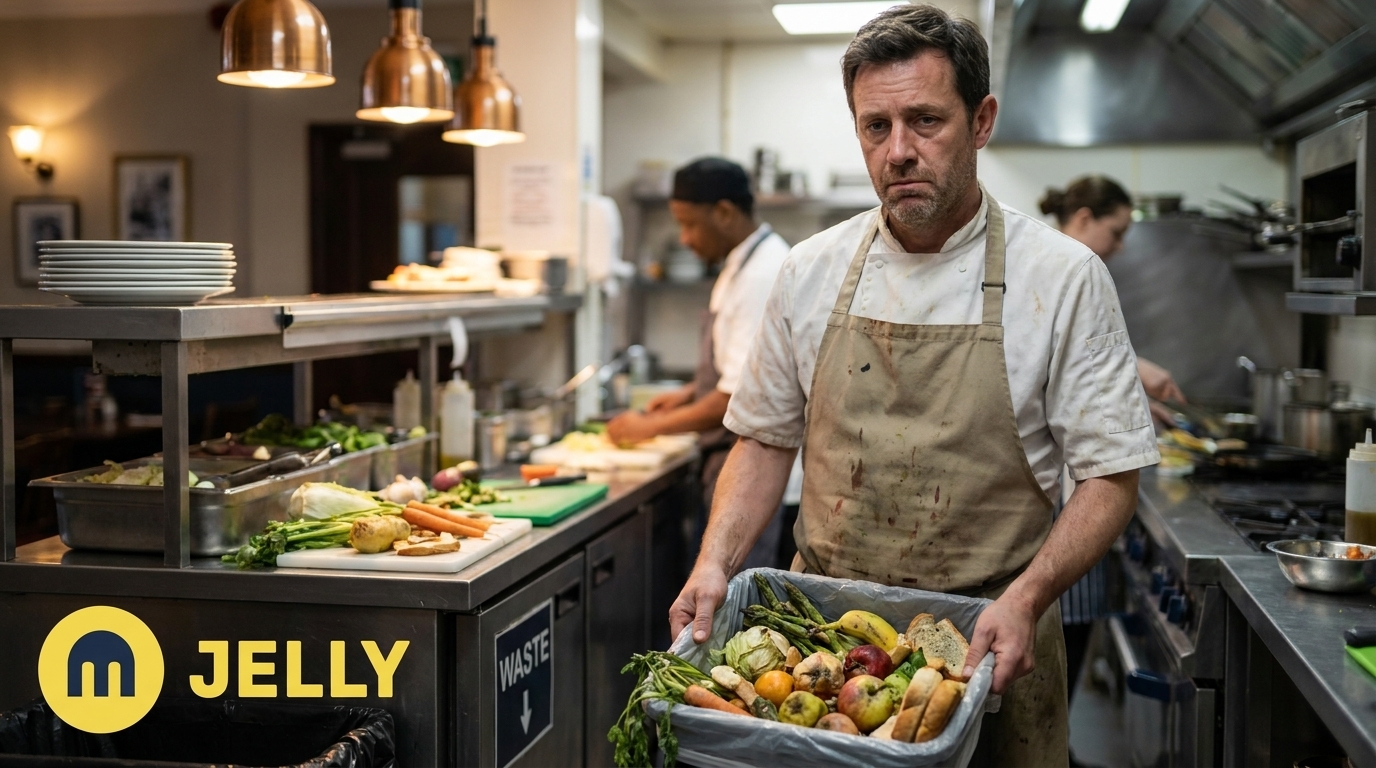
Food waste and food spoilage drain profit from every UK kitchen, but they do it in different ways. Food waste encompasses food and associated inedible parts removed from the human food supply chain in the retail and other distribution of food, food service (restaurants, schools, hospitals, other canteens, etc.), and households sectors. Food spoilage specifically refers to deterioration that renders food unfit for consumption.
| Type | Definition | Kitchen Examples |
|---|---|---|
| Waste | Discarded edible food | Over-portioned steaks, unused prep vegetables, plate returns |
| Spoilage | Food unfit for consumption | Expired dairy, warm-stored fish, mouldy bread |
Key causes include poor storage conditions, inadequate FIFO (first-in, first-out) rotation, and temperature fluctuations. Food spoilage occurs when foods develop an off odor, flavor, or texture due to naturally occurring spoilage bacteria. Kitchens need to spot and remove these products quickly to protect guests and margins. To build effective prevention strategies, teams need to understand the specific mechanisms behind these causes.
The Problem Deep Dive: Spoilage Mechanisms and Weekly Cost Examples
Four spoilage mechanisms account for most kitchen losses and explain many recurring write-offs.
- Microbial spoilage: Lactic Acid Bacteria (e.g., Lactobacillus) convert sugars into lactic acid, causing sour taste and tangy aroma in undesired products.
- Lipolytic breakdown: Lipolytic Bacteria (e.g., Pseudomonas) break down fats, leading to rancidity commonly in aged meats and oily fish.
- Physical damage: Bruising, crushing, or improper handling during storage that shortens shelf life.
- Chemical deterioration: Oxidation that causes rancidity in oils and fats and affects flavour and safety.
These spoilage mechanisms translate directly into weekly cash losses. The table below shows typical cost impacts for a mid-sized UK kitchen.
| Spoilage Cause | Kitchen Impact | Weekly Cost Example |
|---|---|---|
| Temperature abuse | Dairy spoilage, meat deterioration | £200-300 |
| Poor FIFO rotation | Expired vegetables, unused proteins | £150-250 |
| Cross-contamination | Batch spoilage, safety risks | £100-200 |
Cross-contamination from poor cleaning practices, such as using the same rag across multiple areas like from raw meat prep to salad bars, can increase the risk of foodborne illness in food service operations. Better handling, cleaning, and rotation policies cut both safety risks and weekly write-offs.
The Problem Exposed: Why Spreadsheets Cannot Stop Waste and Spoilage
Manual tracking systems hold back growing operations through delayed insights and heavy admin work. Most restaurants waste 5-15% of total purchases: under 5% is exceptional control, 5-10% is industry standard, 10-15% needs attention, and over 15% is emergency mode. The efficiency gap between manual and automated approaches is clear in daily operations.
| Method | Time Investment | Accuracy | Margin Impact |
|---|---|---|---|
| Manual spreadsheets | 10-20 hours/week | 80% (human error) | -2% (delayed reactions) |
| Jelly automation | 3 minutes/dish | 100% (real-time) | +2% (instant alerts) |
This time and accuracy difference explains why manual systems rarely catch spoilage patterns before they become costly. Spreadsheet limitations include outdated pricing, missed spoilage trends, and no way to track real-time cost fluctuations. By the time monthly reports reveal problems, spoilage losses have already occurred. See how Jelly’s 24-hour setup eliminates that lag and replaces guesswork with live data.
The Solution: 7 Practical Ways to Cut Food Waste and Spoilage
Seven evidence-based tactics work together to reduce waste, protect margins, and support consistent service.
- FIFO rotation with date labelling: First-In, First-Out (FIFO) stock rotation in restaurant kitchens, placing older stock at the front and new stock at the back, ensures ingredients are used in the order received and drastically reduces spoilage and expiration risks.
- Temperature monitoring: Maintain cold storage at 4°C or below to slow bacterial growth and extend safe shelf life.
- Portion standardisation: Restaurants standardizing portion sizes across the kitchen with clear guidelines prevent inconsistent portioning, a major source of hidden food waste.
- Supplier audits: Schedule regular quality checks and adjust delivery times so stock arrives fresh and in the right quantities.
- Real-time inventory tracking: Use digital systems instead of manual counts to see stock levels, usage, and variances as they happen.
- Live dish costing: Track recipe costs against current prices so teams can adjust menus and specs before margins erode.
- Price alerts: Receive instant notifications when suppliers change prices so you can react before costs hit the P&L.
When implemented together, these seven tactics create a reinforcing system. FIFO rotation and temperature monitoring prevent spoilage before it starts, while portion standardisation and real-time tracking catch waste as it happens. Operations that apply this full system typically reach the 3-5% savings mentioned in the title within the first year.
Scale the Solution: Use Jelly to Track Waste and Lift Margins
Jelly turns waste and spoilage management into a simple, repeatable process through automated invoice scanning, real-time costing, and instant price alerts. The platform connects with POS systems and accounting software like Xero, delivering the margin improvements shown above within three months at £129 per location.
Key features include Flash Reports for daily gross profit visibility, Price Alert notifications for supplier changes, and the Kitchen module that cuts dish costing time from 28 minutes to 3 minutes. These capabilities translate directly into bottom-line impact. Amber restaurant saves £3,000–£4,000 per month using Jelly, achieving a 68 times return on investment by catching price increases and waste patterns that spreadsheets miss.
“Price hikes were crushing our margins, and I felt helpless. With Jelly, every dish cost is up-to-date at my fingertips. We slashed food costs by 5% in a month. It is a game changer.” – Stuart Noble, Head Chef, Cairn Lodge Hotel.
Jelly focuses on immediate value for growing UK hospitality operations. Unlike complex competitors such as MarketMan, Jelly keeps automation simple so teams can act on insights without extra admin.
Waste and Spoilage FAQs for UK Kitchens
What is the difference between food loss and food waste?
Food loss occurs before food reaches the market, typically during production, storage, or transportation. Food waste refers to discarded edible food at retail, food service, and household levels. In restaurant contexts, waste includes over-preparation, spoiled ingredients, and plate returns that better planning, storage, and portion control could have prevented.
What are the main causes of food spoilage in commercial kitchens?
Primary spoilage causes include bacterial contamination, improper storage temperatures, poor FIFO rotation, cross-contamination, and extended storage periods. Temperature abuse above 5°C accelerates bacterial growth and shortens safe holding times. Inadequate cleaning protocols spread contamination between ingredients, and poor inventory rotation leaves older stock unused until it expires.
How much can restaurants save by reducing waste and spoilage?
Effective waste reduction typically saves 3-5% of total food costs, which becomes a meaningful monthly figure for venues with higher annual revenue. Systematic approaches that combine proper storage, FIFO rotation, portion control, and automated tracking deliver the strongest returns. Many operations see clear reductions in waste within the first year when they treat this as an ongoing system rather than a one-off project.
What is the best software for tracking restaurant waste and spoilage?
Jelly leads the market for UK hospitality operations through automated invoice scanning, real-time dish costing, and instant price alerts. The platform needs minimal setup time, integrates with existing POS and accounting systems, and delivers immediate value through clear, actionable insights. Unlike complex alternatives, Jelly focuses specifically on growing restaurants, pubs, and boutique hotels.
How do you calculate the financial impact of food waste on profit margins?
Start by calculating annual waste costs, then divide that figure by total revenue and multiply by 100 to find the percentage impact. For example, £5,000 annual waste on £400,000 revenue reduces margins by 1.25 percentage points. Hidden costs such as labour, utilities, and disposal often increase the true impact of waste beyond the ingredient values alone.
Conclusion: Reduce Waste and Spoilage to Protect Profit with Jelly
Waste and spoilage reduction using proven tactics and automated tracking delivers fast, visible profitability improvements. Jelly’s comprehensive platform replaces manual processes with streamlined workflows, protecting margins from supplier volatility while cutting administrative workload.
Start protecting your profits today. Chat with our team to see how Jelly reduces waste and spoilage losses while strengthening your bottom line.