
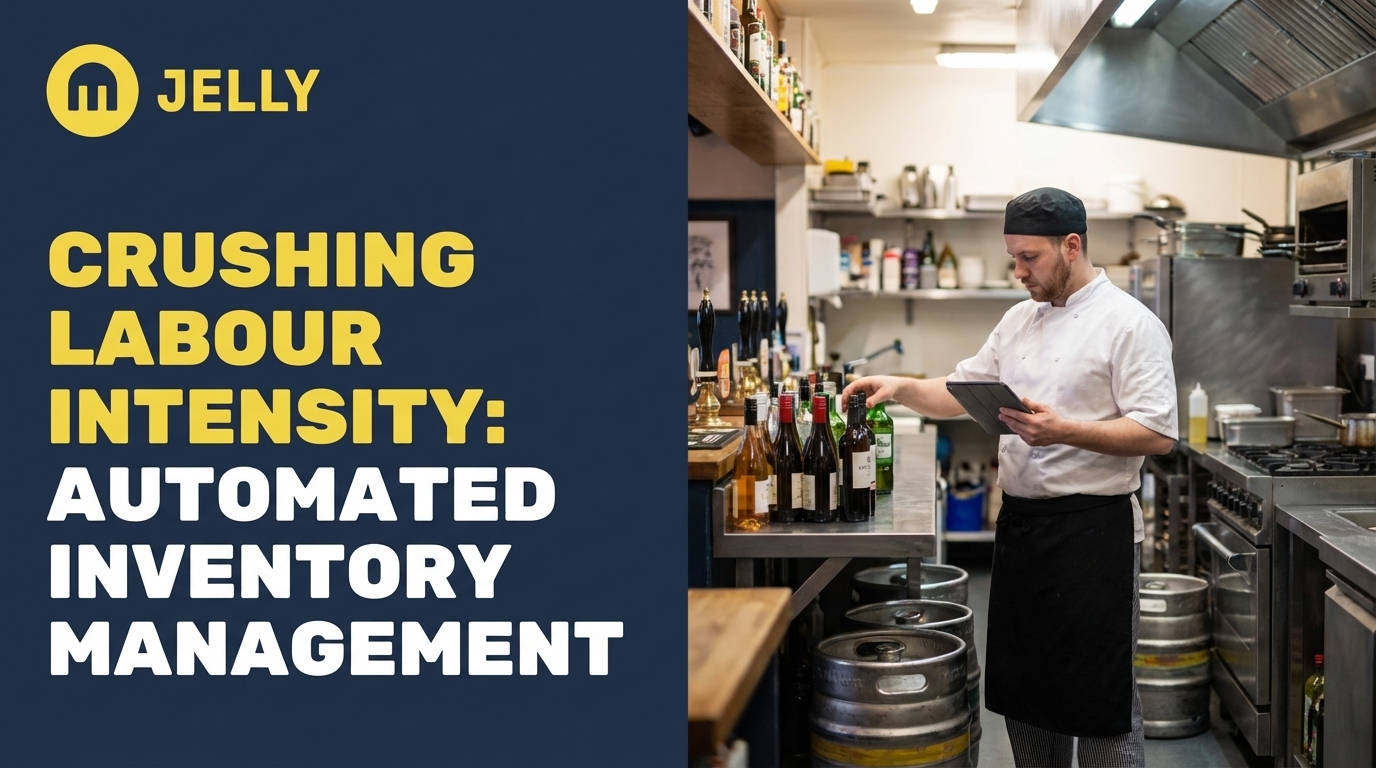
Manual inventory management drains time and resources in UK hospitality businesses, often costing 10-20 hours of staff effort each week. For growing restaurants, pubs, and boutique hotels, this labour burden stifles productivity and cuts into profits. Automation offers a practical solution to reduce workload, improve accuracy, and support sustainable growth.
Weekly manual inventory tasks in hospitality can take up to 20 hours per location, pulling staff away from revenue-focused activities. This post explores how automation cuts down on these hours, protects margins, and frees your team to focus on what matters most, delivering great service.
The Hidden Costs of Manual Inventory Management
Staff Overload: How Manual Tasks Drain Your Team
Manual inventory work burdens your team with repetitive tasks that steal focus from core hospitality roles. Chefs and managers spend hours counting stock, entering data, and reconciling invoices instead of innovating menus or improving customer experiences.
This workload includes tracking hundreds of ingredients, checking supplier prices across spreadsheets, and calculating dish costs with complex variables. The result is frustration and burnout, as staff juggle admin duties alongside their primary responsibilities. These inefficient processes often lower morale and increase staff turnover.
Every hour spent on these tasks is an hour lost for creating value, whether that’s refining dishes or engaging with guests. In a competitive industry, wasting time on admin can set you back significantly.
Profit Loss: How Errors Undermine Your Bottom Line
Inaccurate inventory data from manual systems directly impacts your profitability. Errors in stock counts, outdated pricing, and missed supplier discrepancies lead to significant waste and financial loss.
Poor inventory tracking can result in up to 12% of kitchen costs lost to waste. Additionally, around 10% of food purchased in UK restaurants never reaches customers, with 6% of sales value lost to waste. Overstocking ties up cash, while understocking disrupts service.
Manual errors compound over time. A missed price increase means selling at a loss. Incorrect data entry skews ordering decisions. These small oversights quietly erode your margins week after week. Many UK venues still rely on spreadsheets, losing up to 21% of purchased food to waste.
Growth Barriers: Why Manual Systems Limit Expansion
Scaling your business with manual inventory processes creates overwhelming admin challenges. Managing one location takes 10-20 hours weekly, and adding more sites multiplies the burden, often requiring extra staff just for data management.
Without accurate, real-time data, planning growth becomes guesswork. You can’t track costs effectively, negotiate with suppliers, or adjust pricing confidently. Rising costs like wages and National Insurance make tight inventory control essential for profitability.
Competitors using automation gain an edge. They adjust pricing instantly, reduce admin time, and focus on innovation while manual systems leave you stuck in paperwork. Automation isn’t just an option, it’s a necessity for staying competitive.
Ready to lighten the load? Discover how Jelly automates inventory to save time and boost profits. Book a chat now.
How Automation Cuts Labour Intensity
Time Savings: Streamline Processes for Your Team
Automated inventory systems free your team from tedious admin tasks. Invoice processing, once a multi-hour chore, becomes instant with digital capture of every detail, no typing required.
Stock counts shift from clipboard marathons to quick updates with real-time tracking. Recipe costing drops from nearly 30 minutes per dish to just 3, thanks to automated calculations. Price monitoring happens without effort, with systems alerting you to changes across suppliers instantly.
Your staff can focus on cooking, serving, and growing the business instead of battling spreadsheets. This shift saves hours weekly, letting your team prioritise what drives revenue and guest satisfaction.
Improved Margins: Boost Accuracy and Profitability
Automation ensures precision that manual systems can’t match. Accurate invoice data, instant price updates, and real-time dish costing give you clear financial visibility to protect your bottom line.
Correct data means better menu pricing, reduced waste from overstock, and fewer missed sales from shortages. Predictive tools can cut food waste by over 20%, directly improving margins. Smarter purchasing and supplier negotiations add further savings.
Daily insights replace delayed reports, letting you manage costs proactively. This level of control turns small efficiencies into lasting financial gains for your business.
Data Power: Drive Growth with Actionable Insights
Automated systems provide real-time data to guide strategic decisions. You gain clear views of spending, cost trends, and profitability without waiting for manual updates.
Negotiate supplier deals with hard evidence of price shifts. Optimise menus by pairing sales data with current costs. Manage multiple sites with unified dashboards, ensuring consistency. AI-driven tools forecast ordering and waste, freeing staff for high-value tasks.
With reliable data, growth planning becomes precise. You can predict needs, model new locations, and build on a solid foundation of accurate insights.
Why Choose Jelly for Inventory Automation?
Jelly offers a tailored solution for UK hospitality businesses struggling with manual inventory tasks. Designed for real kitchens, it delivers immediate results without complex setups or extensive training.
Here’s how Jelly reduces labour intensity and adds value:
- Invoice Automation: Snap a photo or forward an email, and Jelly digitises every detail, cutting out manual entry.
- Instant Insights: View gross profit and spending trends daily via a dashboard, no calculations needed.
- Price Alerts: Get notified of ingredient price changes instantly, enabling quick margin protection.
- Live Costing: Build recipes fast with auto-calculated costs, updating as prices shift.
- System Integration: Connect with Xero, Square, and others to streamline bookkeeping and sales analysis.
Customers often save 10-20 hours monthly on admin, while improving margins by 2%. More than numbers, Jelly brings peace of mind, knowing your operations run efficiently. See how Jelly transforms your kitchen. Book a chat today.
Jelly vs. Manual: Comparing Workload Impact
Choosing between manual methods and Jelly’s automation defines whether your business struggles or thrives. Here’s the direct comparison:
|
Aspect |
Manual Tracking |
Jelly Automation |
|
Staff Admin Time |
10-20 hours/week |
Minutes per week |
|
Error Frequency |
High, due to human input |
Minimal, via automation |
|
Cost Updates |
Delayed, manual effort |
Instant, automatic |
|
Price Monitoring |
Often missed |
Alerts within hours |
Manual processes steal time and opportunity. Jelly reclaims those hours for growth-focused work, turning accuracy into a competitive edge.
Real Impact: UK Hospitality Success with Jelly
Automation’s benefits shine in real-world applications. Amber, a Mediterranean restaurant in East London, faced crushing admin tasks before adopting Jelly.
Owner Murat Kilic struggled with volatile pricing and manual costing. After implementing Jelly, invoice automation and price alerts saved £3-4k monthly through better buying and menu control. Staff refocused on service, not paperwork.
Claudio from Illuminati Group noted, “Jelly cleared the data entry mess. Now I focus on what I love.” Holly from Social Pantry added, “Other tools need too much effort. Jelly’s simplicity is vital.” Stuart Noble at Cairn Lodge Hotel cut food costs by 5% in a month using live costing.
These stories highlight consistent outcomes: time saved, margins improved, and teams empowered to prioritise hospitality over admin.
Common Questions About Jelly
Which Tasks Does Jelly Automate to Save Time?
Jelly handles repetitive inventory tasks, saving up to 20 hours weekly. It digitises invoices from photos or emails, automates dish costing from 28 minutes to 3 per item, tracks price changes instantly, reconciles invoices, and integrates with accounting tools like Xero for a 90% reduction in bookkeeping time.
How Soon Can Labour Intensity Drop After Using Jelly?
Time savings start within the first week. Price alerts and insights kick in within 24 hours of invoice scanning. Dish costing speeds up immediately with populated data. Most users save 10-20 hours weekly within a month, alongside a 90% drop in bookkeeping effort.
Does Jelly Work for Multi-Site Businesses?
Jelly supports multi-site operations with a unified dashboard for performance tracking across locations. Each site manages its own inventory, while central reporting aids decision-making. Automation scales without added admin, simplifying supplier negotiations and menu consistency.
Can Jelly Connect With Our Current Systems?
Jelly integrates with POS systems like Square and accounting tools like Xero, pulling sales data and pushing invoices automatically. This cuts manual data transfer, ensuring real-time profit analysis. Even with other systems, Jelly’s core automation still delivers efficiency.
How Does Automation Reduce Errors Compared to Spreadsheets?
Jelly minimises errors by digitising invoices directly, avoiding transcription mistakes. It updates costs instantly, prevents outdated pricing in calculations, and automates complex math for recipes. Supplier discrepancies are flagged early, and audit trails ensure data integrity, even during staff changes.
Final Thoughts: Empower Your Team With Smarter Inventory
Manual inventory tasks threaten your business with wasted time, lost profits, and stalled growth. Each week without automation costs you hours and widens the gap with competitors.
Jelly’s automation lifts this burden, letting chefs create, managers plan, and teams deliver exceptional service. In a landscape of rising costs and fierce competition, efficient operations are essential for success.
Across the UK, businesses like Amber and Social Pantry prove Jelly’s impact, saving thousands monthly and regaining focus on hospitality. Your team and profits deserve this advantage.
Don’t let manual tasks hold you back. Learn how Jelly can transform your operations. Book a chat now.
