
Best GP Margin Calculator Hospitality: Top UK Tools 2026
Compare top GP margin calculators for UK hospitality. Jelly delivers 68x ROI with automated tracking. Book your demo today for real-time insights.

Compare top GP margin calculators for UK hospitality. Jelly delivers 68x ROI with automated tracking. Book your demo today for real-time insights.
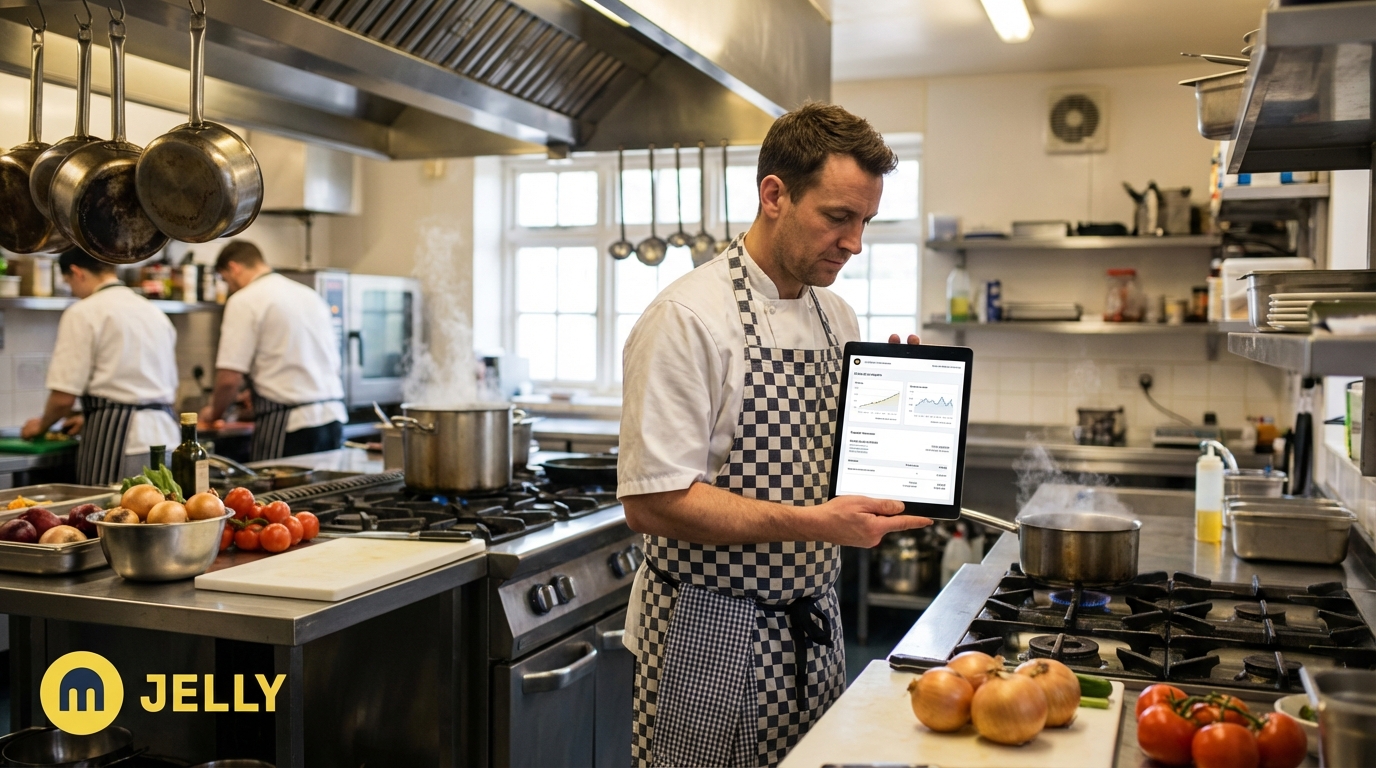
Beat food inflation with Jelly’s automated ingredient price alerts. Save £3,000+ monthly on restaurant costs. Book your demo today!

Discover proven strategies to improve UK restaurant supplier management. Save 10-20 hours weekly with Jelly’s automation. Book your free demo today!

Top supplier management software for UK hotel groups. Jelly saves 10-20 hours weekly with automated invoicing. Book your demo today!

Compare the best supplier management software for UK restaurants. Jelly delivers 2% margin gains in 3 months. Book your Jelly chat today.

Compare 8 top supplier management solutions for UK restaurants, pubs & hotels. Jelly leads with automated invoicing. Book demo today!

Compare top supplier management software for UK hospitality. Jelly leads with automated invoicing & price alerts. Start with Jelly today.

Compare 7 GP calculators for UK hospitality. Jelly ranks #1 with 9.5/10 score, automated tracking & POS integrations. Book your Jelly demo!

Top automated GP margin calculators for UK restaurants. Boost profits 2-3% with Jelly’s real-time tracking. Compare tools & get started!

Master data-driven supplier negotiations saving UK hospitality £3-4k monthly. Get automated price alerts with Jelly – book demo now!
